
Rhamphorhynchus over a Rocky Islet
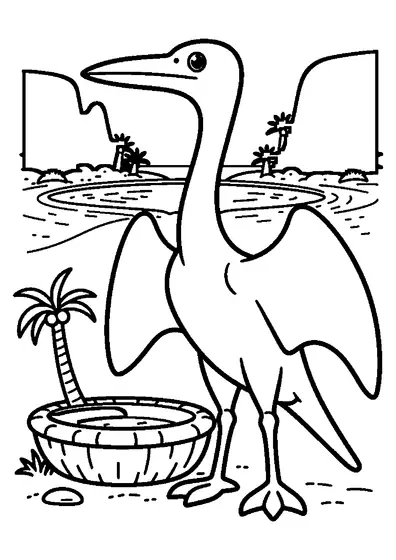
A long-tailed Rhamphorhynchus glides low across a coastal lagoon featuring a tiny rocky islet and floating wood.

A4 format (portrait), black outlines on a white background · for home and classroom use
All coloring pages: Flying and Sea Reptile Coloring Pages
Similar coloring pages: Flying and Sea Reptile Coloring Pages



What else can you print? Free, no account needed
Custom Name Coloring Pages
Enter your child's name to generate a custom coloring page featuring large outline letters to color and decorate.
Open generator →Connect the Dots Generator
Eight connect-the-dots pictures across three difficulty levels. Features faint outline guides for younger children and dots only for older kids.
Open generator →Printables
Worksheets, tracing lines, mazes and dot-to-dots in A4.
Browse printables →
Soaring Over an Ancient Coastal Lagoon
Rhamphorhynchus was a long-tailed flying reptile adapted for hunting along prehistoric shorelines and shallow lagoons. Small island outcroppings offered safe landing spots away from larger land predators. Nearby waves, exposed rocks, and fallen logs characterize the coastal landscape where this pterosaur searched for prey.
Long Tails of Early Flying Reptiles
Unlike later pterosaurs, Rhamphorhynchus possessed a long stiff tail ending in a diamond-shaped vane. This tail vane acted like a rudder on an airplane, helping the creature turn quickly while gliding over ocean currents. The fossilized impressions of these tail structures have preserved details about how early pterosaurs steered in midair.
Real-Life Shades of Coastal Pterosaurs
- Rhamphorhynchus body: Slate gray or olive green
- Tail vane: Dark brown or black
- Wing membranes: Leathery tan or pale beige
- Lagoon water: Emerald green or light blue
- Coastal rocks: Muted gray and dark brown