
Cearadactylus by a Limestone Cave
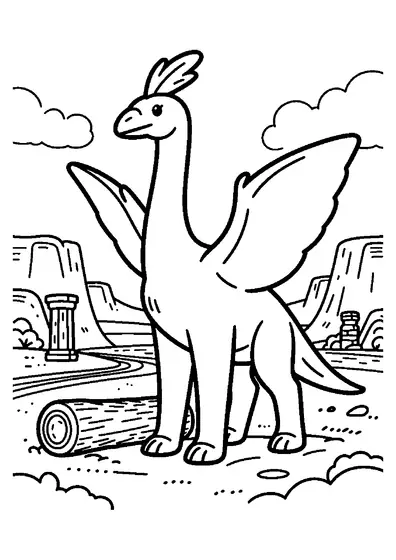
A slender Cearadactylus stands along a riverbank outside the vaulted arched entry of a cave set into terraced limestone rocks.

A4 format (portrait), black outlines on a white background · for home and classroom use
All coloring pages: Flying and Sea Reptile Coloring Pages
Similar coloring pages: Flying and Sea Reptile Coloring Pages




What else can you print? Free, no account needed
Custom Name Coloring Pages
Enter your child's name to generate a custom coloring page featuring large outline letters to color and decorate.
Open generator →Connect the Dots Generator
Eight connect-the-dots pictures across three difficulty levels. Features faint outline guides for younger children and dots only for older kids.
Open generator →Printables
Worksheets, tracing lines, mazes and dot-to-dots in A4.
Browse printables →
Cearadactylus Near a Riverside Cave Entrance
A slender Cearadactylus rests at the opening of a limestone cavern situated beside a flowing river. Layered limestone terraces step up around the wide arch of the cave entrance. The coastal flying reptile occupies the rocky shoreline near the shaded cave portal.
Limestone Formations as Prehistoric Shelters
Limestone caves and cliff terraces formed along ancient waterways through the continuous action of water dissolving soluble rock. Cearadactylus had long jaws lined with sharp, interlocking front teeth designed to snap up fish from rivers and estuaries. Rocky cave entrances provided protected roosting sites where flying reptiles could shelter from harsh storms and large land predators.
Natural Colors of Cearadactylus and Limestone Terraces
- Cearadactylus body skin: ash gray, pale tan, or light olive
- Cearadactylus wing membrane: dark brown or muted orange-gray
- Limestone cave arch and terraces: pale cream, chalky white, gray, or buff
- River water: emerald green, translucent blue, or brownish teal