
Tupandactylus by a Sandstone Mesa
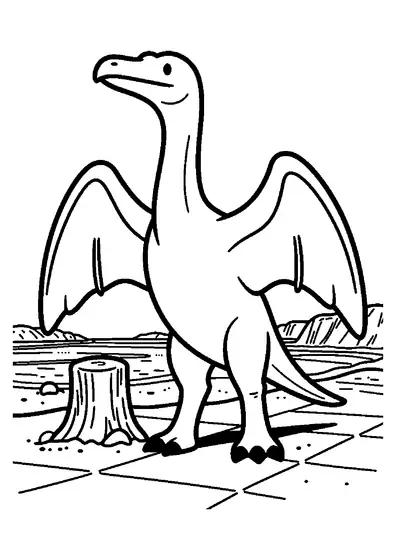
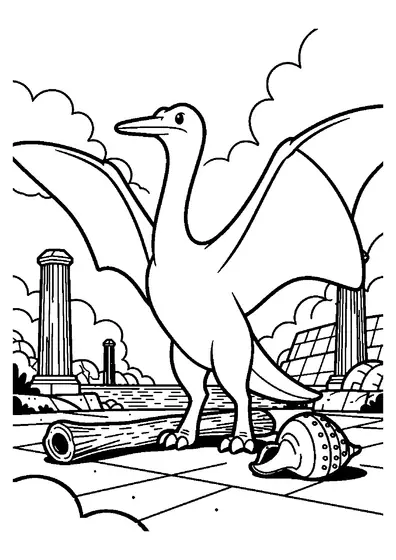
Featuring an enormous head crest, a Tupandactylus rests on a dry plain beneath the cliff face of a tall sandstone mesa.

A4 format (portrait), black outlines on a white background · for home and classroom use
All coloring pages: Flying and Sea Reptile Coloring Pages
Similar coloring pages: Flying and Sea Reptile Coloring Pages



What else can you print? Free, no account needed
Custom Name Coloring Pages
Enter your child's name to generate a custom coloring page featuring large outline letters to color and decorate.
Open generator →Connect the Dots Generator
Eight connect-the-dots pictures across three difficulty levels. Features faint outline guides for younger children and dots only for older kids.
Open generator →Printables
Worksheets, tracing lines, mazes and dot-to-dots in A4.
Browse printables →
Tupandactylus at the Base of a Layered Mesa
A Tupandactylus with a massive head crest stands on an arid plain at the foot of a tall sandstone mesa. Earthy rock layers form the steep cliff face of the mesa in the background. The broad, open ground stretches around the prehistoric reptile near the base of the rock formation.
The Unusual Crest of Tupandactylus
Tupandactylus possessed one of the largest sail-like head crests relative to body size among all flying reptiles. This huge structure was made primarily of soft tissue supported by long bony struts extending from the skull. Arid inland environments with sandstone cliffs provided strong thermal updrafts that helped these large-crested creatures launch into flight despite their massive head appendages.
Natural Colors of Tupandactylus and Sandstone Environment
- Tupandactylus head crest: vibrant coral, crimson, yellow, or patterned black
- Tupandactylus body skin: warm brown, slate gray, or tan
- Sandstone mesa rock layers: terracotta red, rust brown, buff, and cream
- Arid plain ground: dusty beige, pale yellow, or reddish earth