
Giganotosaurus at the Edge of a Sandy Ravine
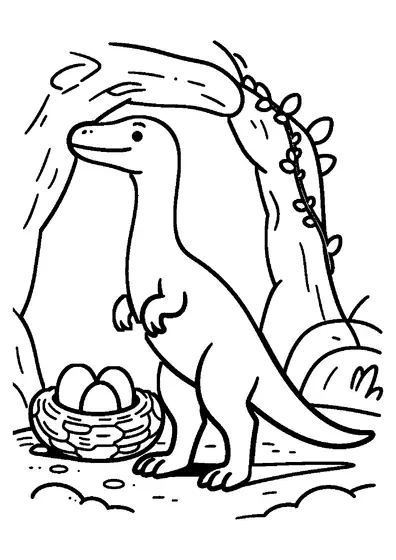
A giant predatory dinosaur overlooks a deep sandy ravine within a vast prehistoric landscape.

A4 format (landscape), black outlines on a white background · for home and classroom use
All coloring pages: Dinosaur Coloring Pages
Similar coloring pages: Dinosaur Coloring Pages

What else can you print? Free, no account needed
Custom Name Coloring Pages
Enter your child's name to generate a custom coloring page featuring large outline letters to color and decorate.
Open generator →Connect the Dots Generator
Eight connect-the-dots pictures across three difficulty levels. Features faint outline guides for younger children and dots only for older kids.
Open generator →Printables
Worksheets, tracing lines, mazes and dot-to-dots in A4.
Browse printables →
A Giant Predator Above a Sandy Ravine
This illustration depicts a Giganotosaurus standing at the edge of a steep ravine in a sandy prehistoric setting. The vast landscape conveys the open terrain where this giant carnivore navigated its territory.
Facts About Giganotosaurus
Giganotosaurus was one of the largest land-dwelling meat-eaters that ever existed, inhabiting South America during the Late Cretaceous Period. Measuring over forty feet long, it had powerful hind legs, a long heavy tail for balance, and serrated teeth designed for slicing prey. It roamed dry floodplains and river valleys in search of large plant-eating dinosaurs.
Colors of the Ravine Landscape
- Giganotosaurus hide: dusty gray, tawny brown, or dark olive tones
- Jaw and teeth: off-white enamel with pale pink gums
- Ravine earth walls: warm ochre, terracotta red, or sandy beige
- Prehistoric ground surface: pale tan, coarse gray gravel, or reddish soil