
Meteorite Found on a Planet's Surface
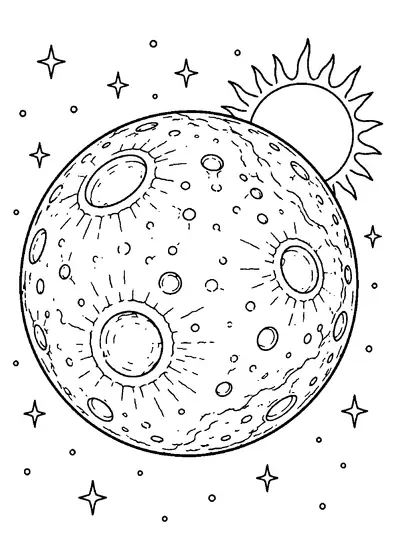
A heavy cosmic rock rests upon distant planetary ground, showing uneven outer walls, large hollows, and a flattened base.

A4 format (portrait), black outlines on a white background · for home and classroom use
All coloring pages: Planet and Solar System Coloring Pages
Similar coloring pages: Planet and Solar System Coloring Pages



What else can you print? Free, no account needed
Custom Name Coloring Pages
Enter your child's name to generate a custom coloring page featuring large outline letters to color and decorate.
Open generator →Connect the Dots Generator
Eight connect-the-dots pictures across three difficulty levels. Features faint outline guides for younger children and dots only for older kids.
Open generator →Printables
Worksheets, tracing lines, mazes and dot-to-dots in A4.
Browse printables →
A Cosmic Rock Resting on a Distant World
This scene presents a solid meteorite settled on the ground of an alien planet. The heavy space rock features rough, rugged sides, multiple prominent hollows, and a broad, flat base where it rests against the planetary surface.
Discoveries of Space Minerals on Land
When a meteoroid survives its fiery trip through a planet's atmosphere and crashes onto the ground, the remaining rock is called a meteorite. Scientists study these fallen space rocks because they contain pristine samples of minerals created during the birth of planets. Many meteorites contain rare iron-nickel alloys that do not naturally form on the surface of Earth.
Natural Colors of a Fallen Meteorite
- Meteorite Exterior: Dark charcoal black, rusted reddish brown, or dull nickel gray
- Surface Hollows: Deep dark gray or shadow black
- Planetary Ground Surface: Dusty orange, light terracotta, or pale stony brown