
Asteroid with a Rough Surface
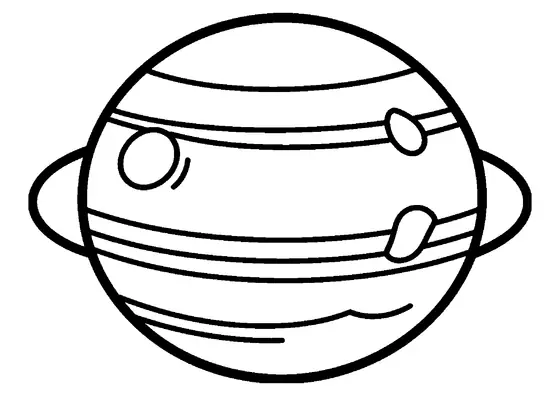
A giant celestial rock floats in orbit, featuring an uneven outer shape, pronounced surface depressions, and a wide fissure.

A4 format (landscape), black outlines on a white background · for home and classroom use
All coloring pages: Planet and Solar System Coloring Pages
Similar coloring pages: Planet and Solar System Coloring Pages





What else can you print? Free, no account needed
Custom Name Coloring Pages
Enter your child's name to generate a custom coloring page featuring large outline letters to color and decorate.
Open generator →Connect the Dots Generator
Eight connect-the-dots pictures across three difficulty levels. Features faint outline guides for younger children and dots only for older kids.
Open generator →Printables
Worksheets, tracing lines, mazes and dot-to-dots in A4.
Browse printables →
A Giant Space Rock in Orbit
This object is depicted in full view as a massive asteroid floating in the vacuum of space. The rocky body exhibits an irregular outer form marked by several deep hollows and a prominent, wide crack extending across its surface.
How Asteroids Shape the Solar System
Asteroids are rocky remnants left over from the early formation of our solar system roughly 4.6 billion years ago. Most of these space rocks orbit the Sun within a giant belt located between Mars and Jupiter. Because asteroids lack atmospheres, their surfaces remain preserved for billions of years, keeping records of ancient cosmic collisions.
Real Colors of an Asteroid
- Outer Rocky Surface: Dark gray, brownish charcoal, or dusty metallic gray
- Deep Hollows and Depressions: Dark shadow black or deep brownish black
- Inner Surface Fractures: Medium slate gray or pale ash gray