
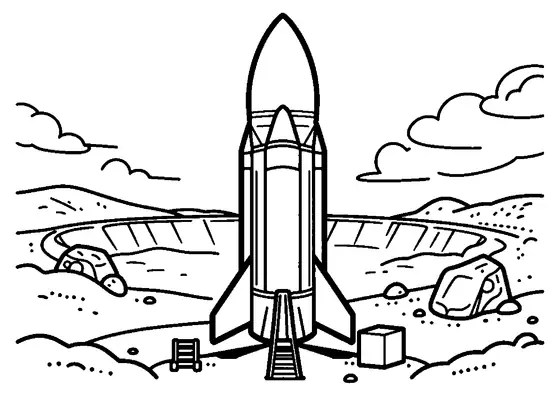
Rocket Over a Slate Canyon
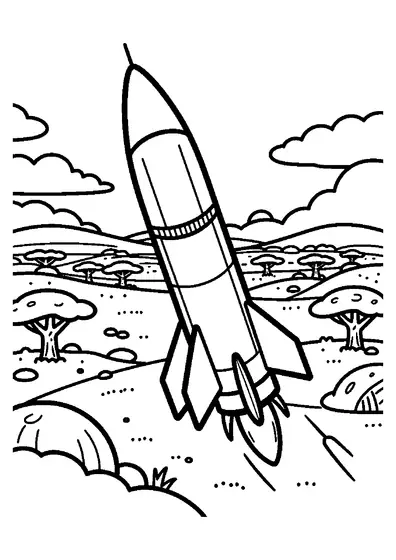
A streamlined rocket glides through the air above a wide canyon defined by steep, layered rock formations.

A4 format (portrait), black outlines on a white background · for home and classroom use
All coloring pages: Space and Rocket Coloring Pages
Similar coloring pages: Space and Rocket Coloring Pages

What else can you print? Free, no account needed
Custom Name Coloring Pages
Enter your child's name to generate a custom coloring page featuring large outline letters to color and decorate.
Open generator →Connect the Dots Generator
Eight connect-the-dots pictures across three difficulty levels. Features faint outline guides for younger children and dots only for older kids.
Open generator →Printables
Worksheets, tracing lines, mazes and dot-to-dots in A4.
Browse printables →
Streamlined Rocket Traversing a Layered Slate Canyon
A sleek rocket glides past the rock walls of a wide canyon composed of large, layered geological strata. Layered canyon walls form over millions of years as sediment settles and compresses under tremendous pressure. High-speed flight through low-altitude canyons requires precise navigation sensors to avoid rocky cliffs and turbulent air currents.
Geological Features of Canyons and High-Speed Flight
Slate is a fine-grained metamorphic rock formed from shale and clay minerals subjected to geological heat and pressure. It easily splits into flat, layered sheets, giving canyon walls a characteristic step-like appearance. Rocket propulsion at low altitudes creates powerful shockwaves that reflect off narrow valley walls.
Earth Tones of Canyon Rocks and Rockets
- Rocket fuselage: polished chrome, white, or titanium gray
- Upper canyon rim: reddish brown or sun-baked terracotta
- Layered slate rock walls: dark slate gray, charcoal, or subtle bluish gray
- Canyon floor sediment: pale tan or sandy ochre