
Rocket on the Landing Pad
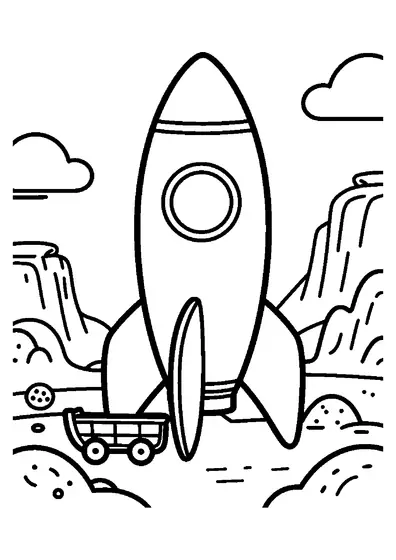
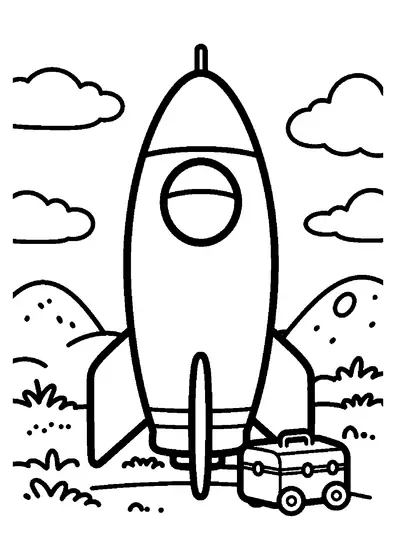
A broad interstellar spacecraft rests upon a circular landing platform amid a cratered landscape on an alien planet.

A4 format (portrait), black outlines on a white background · for home and classroom use
All coloring pages: Space and Rocket Coloring Pages
Similar coloring pages: Space and Rocket Coloring Pages


What else can you print? Free, no account needed
Custom Name Coloring Pages
Enter your child's name to generate a custom coloring page featuring large outline letters to color and decorate.
Open generator →Connect the Dots Generator
Eight connect-the-dots pictures across three difficulty levels. Features faint outline guides for younger children and dots only for older kids.
Open generator →Printables
Worksheets, tracing lines, mazes and dot-to-dots in A4.
Browse printables →
Planetary Exploration Spacecraft on a Circular Landing Platform
A wide planetary landing vessel sits anchored on a designated circular landing pad on an alien world. Surface landing pads provide stable, leveled touchdown surfaces that protect rocket thrusters from kicking up loose gravel and planetary dust during touchdown.
Thermal Protection and Reusable Landing Gear
Spacecraft designed to land on extraterrestrial surfaces utilize heavy-duty landing legs equipped with shock absorbers to cushion high-velocity impacts. Circular landing zones feature heat-resistant concrete or metal plating engineered to withstand high temperatures from rocket thruster exhaust. Planetary soil surrounding crater rims often contains unweathered minerals unlike soil on Earth.
Real Colors of Planetary Landing Facilities
- Spaceship hull: reflective silver, matte gray, or white composite heat shield tiles
- Landing pad surface: dark charcoal gray, reinforced concrete gray, or steel alloy
- Planetary rocks and soil: reddish brown, ochre, or basalt black terrain
- Deep surface craters: shadowed dark gray or muted tan earth tone