
Rocket on a Pumice Island
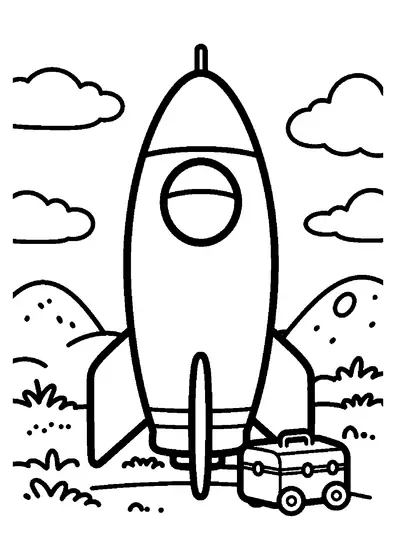
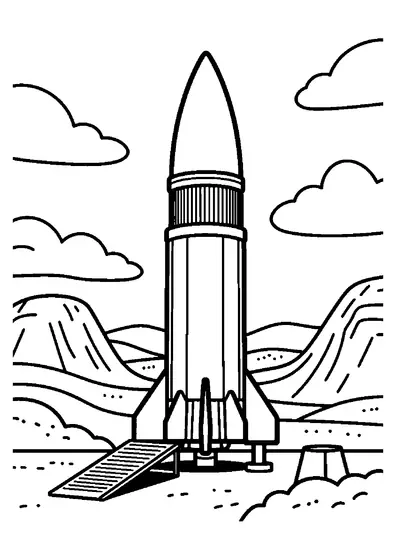
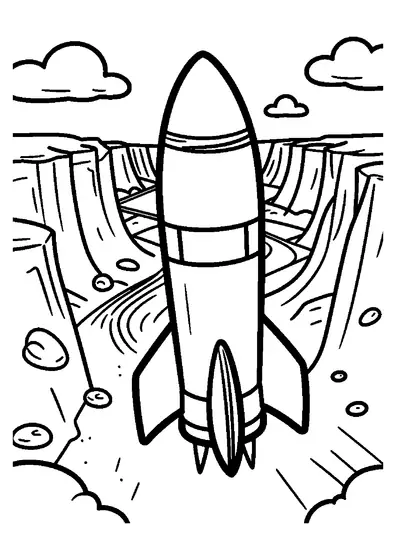
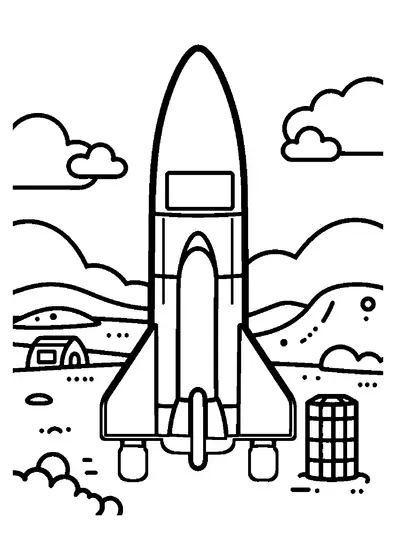
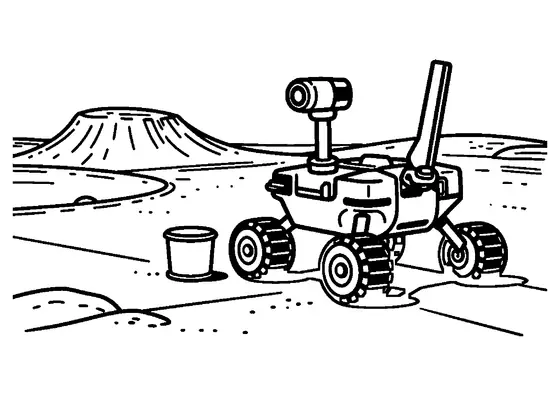
A spacecraft sits upright on a terrain made of porous pumice rock surrounded by waves of fine surface dust.

A4 format (portrait), black outlines on a white background · for home and classroom use
All coloring pages: Space and Rocket Coloring Pages
Similar coloring pages: Space and Rocket Coloring Pages

What else can you print? Free, no account needed
Custom Name Coloring Pages
Enter your child's name to generate a custom coloring page featuring large outline letters to color and decorate.
Open generator →Connect the Dots Generator
Eight connect-the-dots pictures across three difficulty levels. Features faint outline guides for younger children and dots only for older kids.
Open generator →Printables
Worksheets, tracing lines, mazes and dot-to-dots in A4.
Browse printables →
Spacecraft on a Porous Pumice Rock Island
The scene displays a space vehicle grounded on a rocky island constructed from lightweight pumice stones. Floating dust waves sweep across the porous landscape created by ancient volcanic or celestial events. Landing on pumice terrain requires sturdy landing pads to distribute weight evenly across fragile rock surfaces.
Pumice Rocks in Extraterrestrial Landscapes
Pumice is a porous volcanic rock formed when super-heated molten stone cools rapidly while trapped gas bubbles expand inside. Because of the numerous empty pockets trapped within its structure, pumice is so light that many pieces float on liquid water. Planetary geologists study pumice formations to understand past volcanic activity and gas eruptions on celestial bodies.
Authentic Colors of Spacecraft and Pumice Rock
- Rocket body panels: off-white or silver reflective alloy
- Spacecraft landing pads: dark gray steel or matte charcoal heat shield coating
- Pumice boulders: light gray, beige, or pale tan with porous shadows
- Ground surface dust waves: dusty gray or muted brownish orange dust