
Gypsy Mushrooms Beside a Chestnut
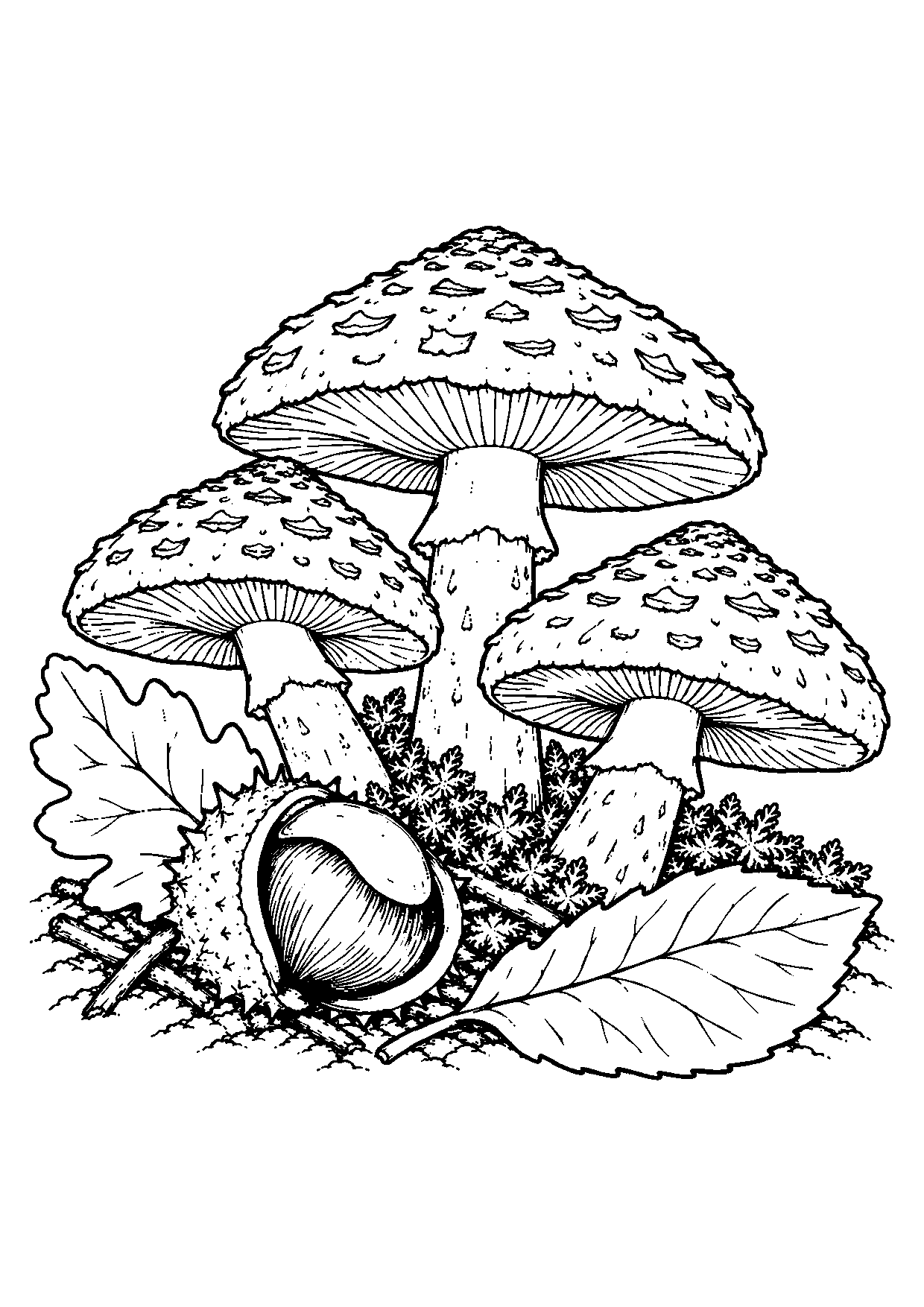
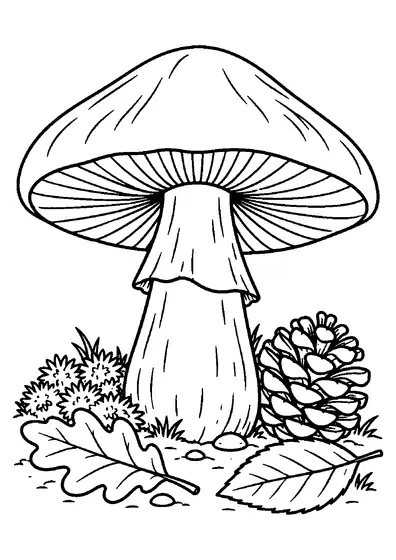
Three broad-capped gypsy mushrooms stand on a small forest-floor patch beside an opened chestnut husk, leaves, moss, and short twigs.
A4 format (portrait), black outlines on a white background · for home and classroom use
All coloring pages: Mushroom Coloring Pages
Similar coloring pages: Mushroom Coloring Pages

What else can you print? Free, no account needed
Custom Name Coloring Pages
Enter your child's name to generate a custom coloring page featuring large outline letters to color and decorate.
Open generator →Connect the Dots Generator
Eight connect-the-dots pictures across three difficulty levels. Features faint outline guides for younger children and dots only for older kids.
Open generator →Printables
Worksheets, tracing lines, mazes and dot-to-dots in A4.
Browse printables →
What is shown in the scene
The illustration shows three mushrooms grouped closely together, each with a broad rounded cap and a clearly visible stem. In front of the group is a chestnut in an opened spiny husk. Two fallen leaves, several small moss patches, and a few short twigs create a compact autumn woodland setting around the mushrooms. Most of the background remains plain white, so the cap shapes, chestnut, leaves, and ground details stay easy to see.
Gypsy mushroom facts
The mushroom traditionally called the gypsy mushroom is Cortinarius caperatus, also known as the wrinkled cap. Mature caps can become broad and often show a wrinkled or finely textured surface. The stem typically has a ring, a feature left after a protective veil tears as the cap expands. The species grows on the ground in woodland, often in association with trees through underground mycorrhizal connections. In these partnerships, fungal hyphae interact with tree roots and exchange nutrients. The mushroom seen above ground is a temporary fruiting body; the persistent fungal mycelium remains hidden in the soil.
Color ideas
- Try warm tan, ochre, honey brown, or light brown on the mushroom caps.
- Use cream or pale beige on the stems, with a slightly darker ring area.
- Color the chestnut rich brown and the spiny husk tan to chestnut brown.
- Give the fallen leaves amber, rust, copper, or red-brown shades.
- Use several greens for the moss and muted browns for the small twigs.