
Chicken of the Woods on a Stump
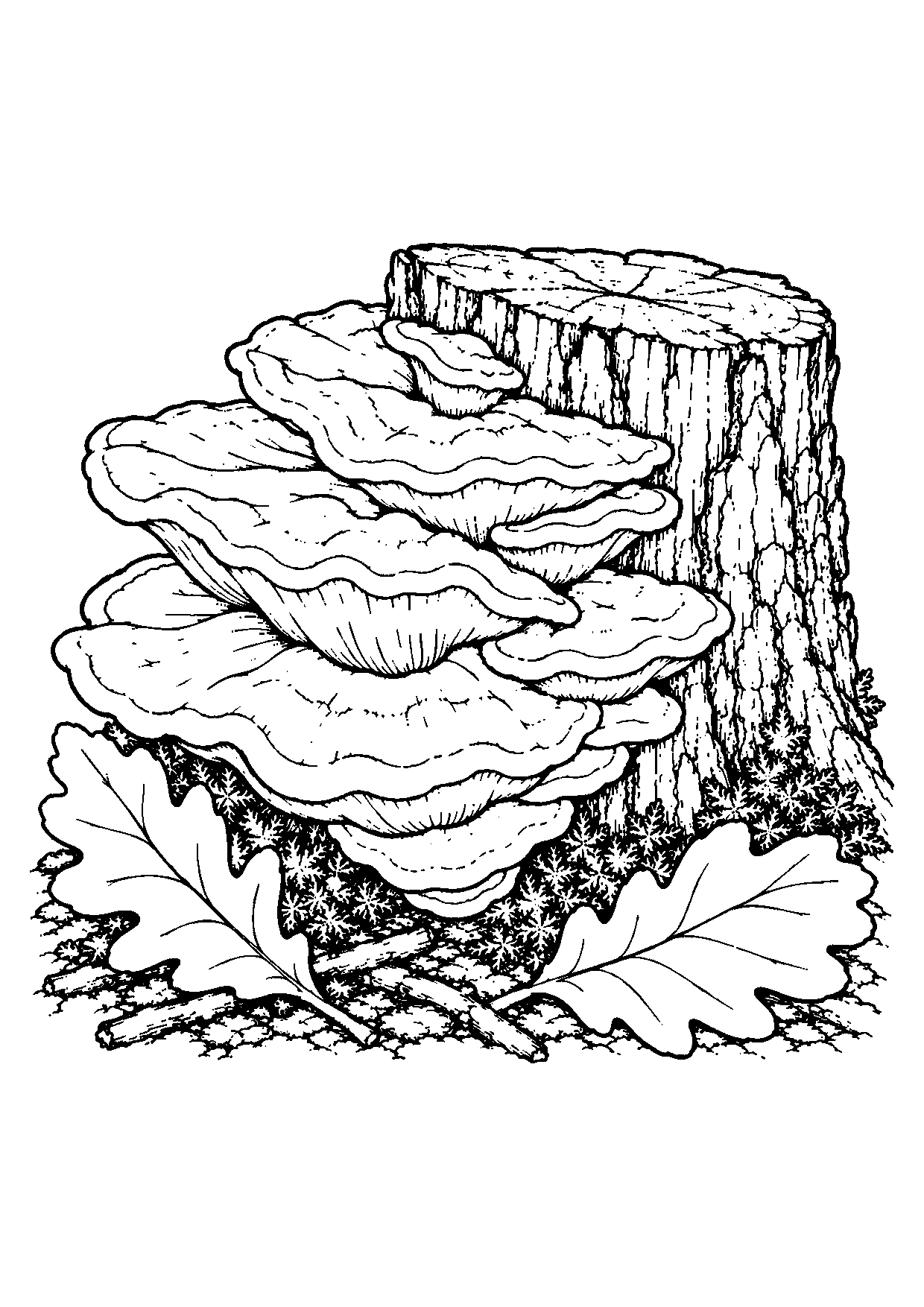
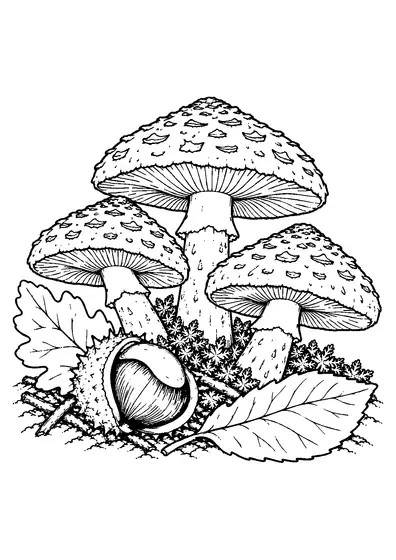
A large cluster of broad shelf-shaped chicken of the woods fungi grows from a short cut stump above fallen oak leaves, moss, twigs, and bark pieces.
A4 format (portrait), black outlines on a white background · for home and classroom use
All coloring pages: Mushroom Coloring Pages
Similar coloring pages: Mushroom Coloring Pages


What else can you print? Free, no account needed
Custom Name Coloring Pages
Enter your child's name to generate a custom coloring page featuring large outline letters to color and decorate.
Open generator →Connect the Dots Generator
Eight connect-the-dots pictures across three difficulty levels. Features faint outline guides for younger children and dots only for older kids.
Open generator →Printables
Worksheets, tracing lines, mazes and dot-to-dots in A4.
Browse printables →
What is shown in the scene
The picture focuses on a layered cluster of wide, overlapping fungal shelves attached to the side of a short tree stump. Two fallen oak leaves lie in front of the stump, while small patches of moss, short twigs, bark pieces, and close ground details form a compact woodland base. The cut top of the stump and the stacked shelves make the growth habit easy to understand, and the open white background keeps attention on the fungus and wood.
Chicken of the woods facts
Chicken of the woods is the common name for several closely related Laetiporus fungi. They grow as overlapping brackets or shelves on wood rather than as ordinary stem-and-cap mushrooms. Fresh fruiting bodies are well known for vivid yellow, orange, and sulfur-colored bands, although colors can fade as the fungus ages. The underside has many tiny pores instead of gills; spores are released from these pore surfaces. Laetiporus species grow on living or dead trees and use wood as their substrate. A visible cluster may be large, but it is still only the fruiting part of a fungus whose mycelium extends through the wood.
Color ideas
- Use bright sulfur yellow, golden yellow, orange, and peach across the layered shelves.
- Make the shelf edges lighter to separate overlapping layers.
- Color the stump in tan, warm brown, and gray-brown bark tones.
- Try ochre, rust, copper, and brown on the two fallen oak leaves.
- Add several greens to the moss and muted browns to twigs and bark pieces.