
Earthstar Fungus Beside a Chestnut
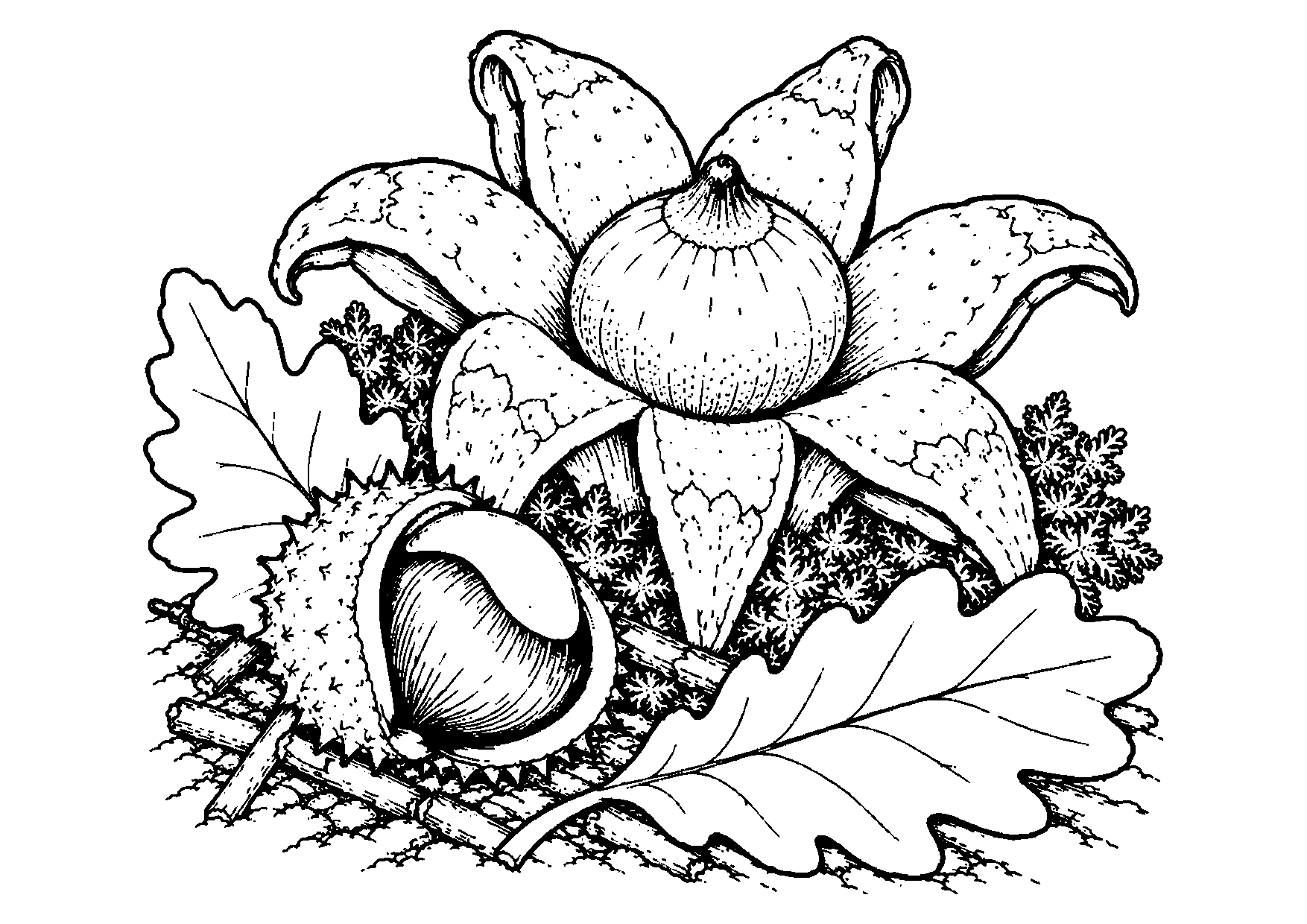
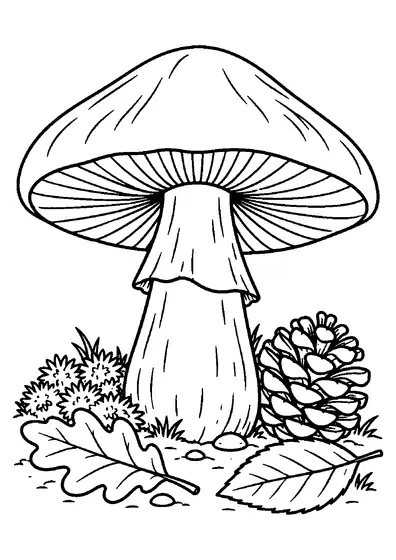
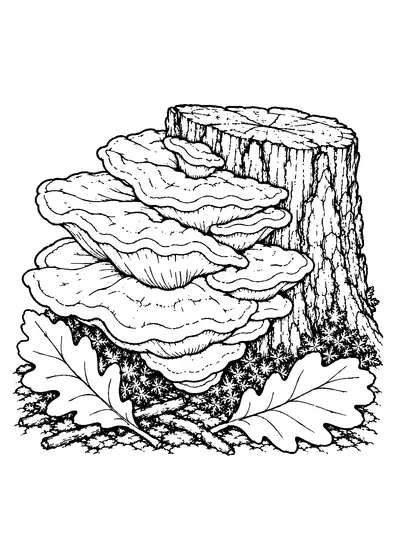
One large earthstar fungus opens its star-shaped rays beside a chestnut, fallen oak leaves, moss, short twigs, and close forest-floor details.
A4 format (landscape), black outlines on a white background · for home and classroom use
All coloring pages: Mushroom Coloring Pages
Similar coloring pages: Mushroom Coloring Pages

What else can you print? Free, no account needed
Custom Name Coloring Pages
Enter your child's name to generate a custom coloring page featuring large outline letters to color and decorate.
Open generator →Connect the Dots Generator
Eight connect-the-dots pictures across three difficulty levels. Features faint outline guides for younger children and dots only for older kids.
Open generator →Printables
Worksheets, tracing lines, mazes and dot-to-dots in A4.
Browse printables →
What is shown in the scene
A single earthstar is the clear center of the picture. Its outer layer has opened into several pointed rays, creating a star shape around the round spore sac in the middle. Beside it rests a chestnut in a split spiny husk, with two fallen oak leaves nearby. Small areas of moss and short twigs complete the compact forest-floor setting, while most of the surrounding background stays plain white.
Earthstar fungus facts
Earthstars are fungi in which the outer layers of the fruiting body split and peel back into rays as the fungus matures. This exposes a rounded spore sac at the center and produces the distinctive star-like form. Many earthstars release their microscopic spores through a small opening in the spore sac when raindrops, moving air, or physical pressure disturb it. They are usually found on soil, leaf litter, or other organic material in woodland and similar habitats. The visible earthstar is the reproductive structure; threadlike fungal mycelium extends through the surrounding substrate and is usually hidden from view.
Color ideas
- Use pale beige, tan, gray-brown, or earthy brown on the star-shaped rays.
- Make the central spore sac slightly darker or lighter than the rays for contrast.
- Color the chestnut rich reddish brown and its split husk warm tan.
- Try gold, ochre, russet, and brown on the fallen oak leaves.
- Add fresh or muted greens to the moss and soft browns to the twigs.