
Wood Blewit Mushrooms Beside a Chestnut
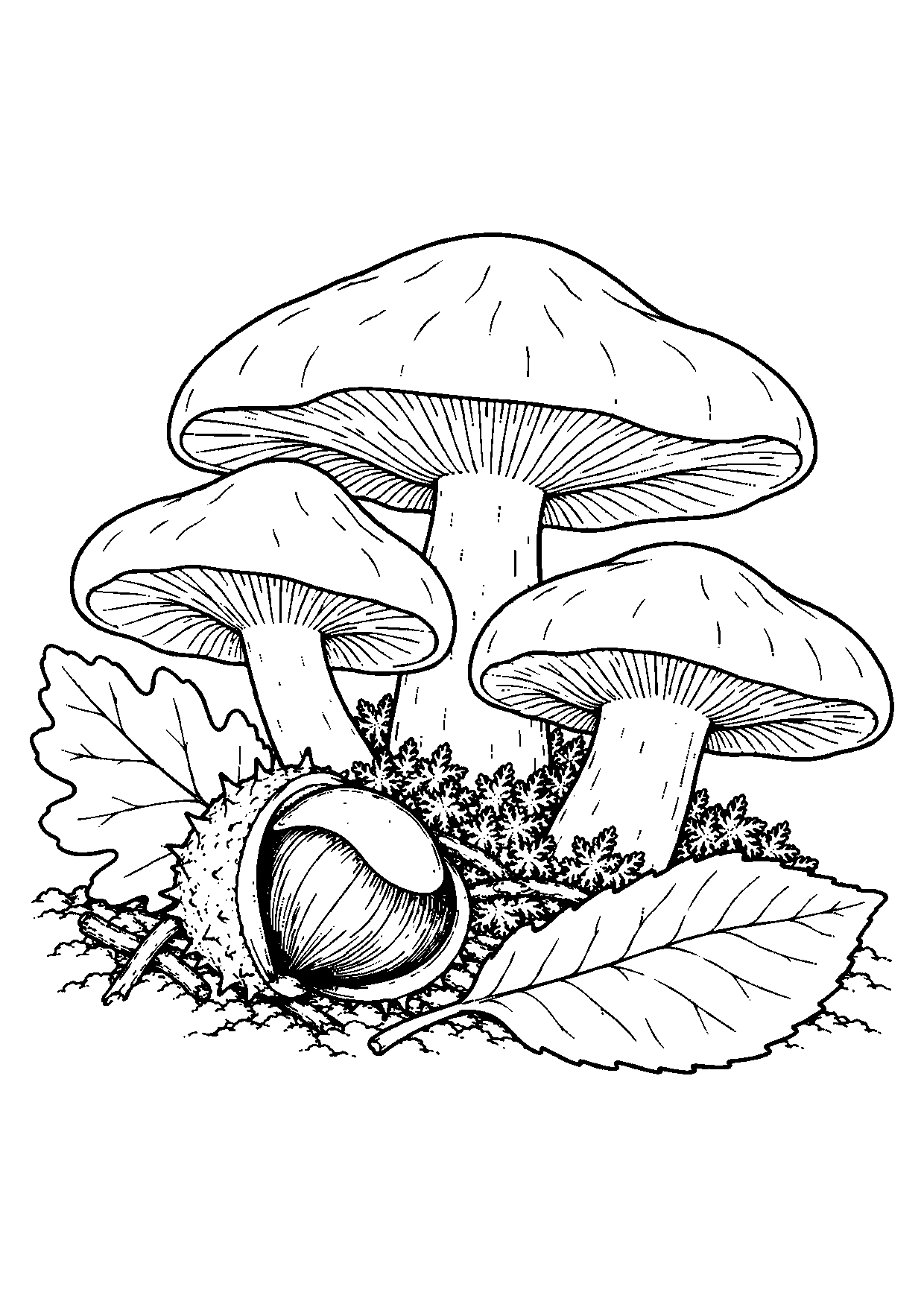
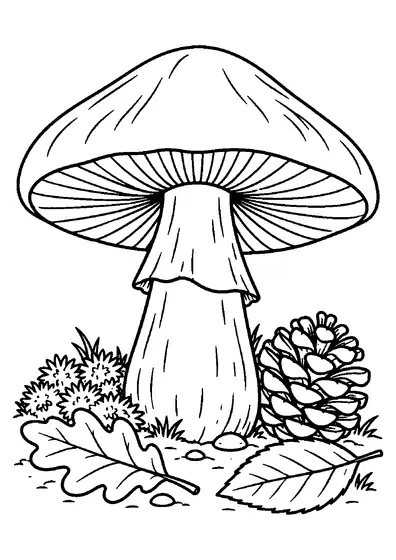
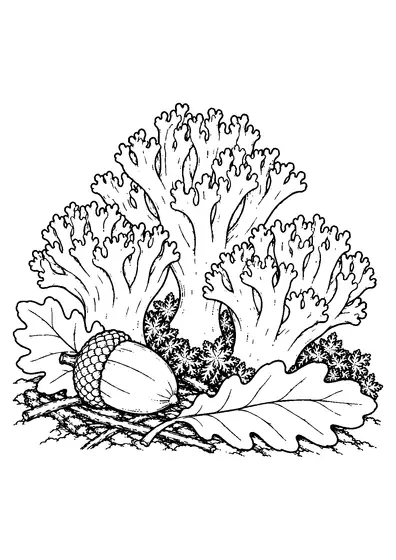
Three broad-capped mushrooms stand on a small forest-floor patch beside an opened chestnut husk, leaves, twigs, and moss.
A4 format (portrait), black outlines on a white background · for home and classroom use
All coloring pages: Mushroom Coloring Pages
Similar coloring pages: Mushroom Coloring Pages

What else can you print? Free, no account needed
Custom Name Coloring Pages
Enter your child's name to generate a custom coloring page featuring large outline letters to color and decorate.
Open generator →Connect the Dots Generator
Eight connect-the-dots pictures across three difficulty levels. Features faint outline guides for younger children and dots only for older kids.
Open generator →Printables
Worksheets, tracing lines, mazes and dot-to-dots in A4.
Browse printables →
What is shown in the scene
The picture centers on three sturdy mushrooms with rounded, broad caps and visible stems. In front of them lies a chestnut in a split, spiny husk. Two fallen leaves, short twigs, and small patches of moss keep the autumn setting close to the mushrooms instead of filling the whole background. The large white areas around the group make the shapes easy to distinguish, while the chestnut and leaves add a clear woodland-season detail.
Wood blewit facts
Wood blewits are mushrooms commonly known from leaf litter and humus-rich ground in woods, gardens, and other places with plenty of decaying plant material. They are especially associated with the cooler part of the year. Their caps can become broad and fairly flat as they mature, and young specimens are often known for lilac to violet tones that may fade toward browner shades with age. Like many gilled mushrooms, they release microscopic spores from structures beneath the cap. Mushrooms are the visible fruiting bodies of a much larger fungal network called mycelium, which usually remains hidden in soil or organic matter.
Color ideas
- Try lilac, violet, or muted purple on the mushroom caps and stems.
- Use chestnut brown for the nut and warm tan for the split husk.
- Choose ochre, rusty orange, or red-brown for the fallen leaves.
- Add fresh and dark greens to the small moss patches.
- Keep the twigs in light brown or gray-brown tones for gentle contrast.