
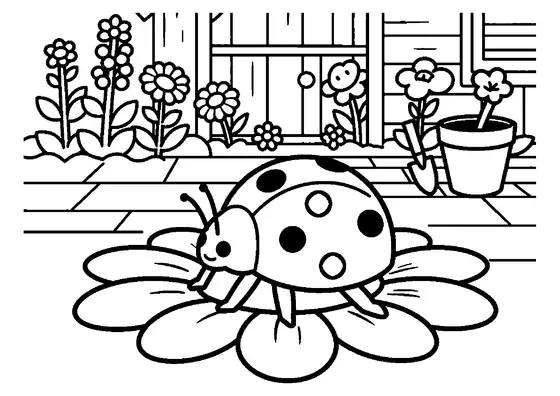
Ladybug on a Daisy in a Country Farmyard
A spotted ladybug rests on a wide white daisy petal in a sunny country farmyard.

A4 format (landscape), black outlines on a white background · for home and classroom use
All coloring pages: Flower Meadow Coloring Pages
Similar coloring pages: Flower Meadow Coloring Pages


What else can you print? Free, no account needed
Custom Name Coloring Pages
Enter your child's name to generate a custom coloring page featuring large outline letters to color and decorate.
Open generator →Connect the Dots Generator
Eight connect-the-dots pictures across three difficulty levels. Features faint outline guides for younger children and dots only for older kids.
Open generator →Printables
Worksheets, tracing lines, mazes and dot-to-dots in A4.
Browse printables →
A Spotty Ladybug Resting on a Farmyard Daisy
In the heart of a rural farmyard, a ladybug settles onto a blossoming daisy. The delicate insect rests on the flower petal surrounded by a bed of garden daisies.
Helpful Insects in Rural Gardens
Ladybugs are prized by farmers and gardeners because a single beetle can consume thousands of crop-damaging aphids during its lifetime. Their bright red elytra with black spots serve as a natural warning signal to birds that they taste unpalatable. Common garden daisies bloom throughout the warm months, providing abundant pollen and resting spots for beneficial garden insects.
Real Colors of Ladybugs and Daisy Blossoms
- Ladybug wing covers: vibrant scarlet red or orange with black spots
- Ladybug head and legs: solid black with white markings
- Daisy petals: clean crisp white
- Daisy center disc: bright sunny yellow