
Ladybug Among Daisies and Hollyhocks
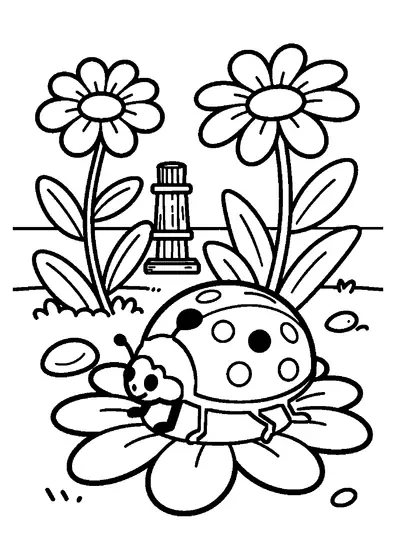
A tiny ladybug explores a lush garden bed filled with wild daisies and tall hollyhocks.

A4 format (landscape), black outlines on a white background · for home and classroom use
All coloring pages: Flower Meadow Coloring Pages
Similar coloring pages: Flower Meadow Coloring Pages

What else can you print? Free, no account needed
Custom Name Coloring Pages
Enter your child's name to generate a custom coloring page featuring large outline letters to color and decorate.
Open generator →Connect the Dots Generator
Eight connect-the-dots pictures across three difficulty levels. Features faint outline guides for younger children and dots only for older kids.
Open generator →Printables
Worksheets, tracing lines, mazes and dot-to-dots in A4.
Browse printables →
Garden Ladybug with Daisies and Hollyhocks
This depiction showcases a ladybug amidst garden flora, including low-growing daisies and tall hollyhocks. Garden beds with varied plant heights attract beneficial insects that help protect flowers from garden pests. Daisies spread across lower ground while hollyhocks tower overhead.
Remarkable Facts About Ladybugs
A single ladybug can consume thousands of aphids during its lifetime, making it an essential helper for gardeners. When threatened, ladybugs release a tiny droplet of foul-tasting yellow fluid from their leg joints to deter predators. Hollyhocks belong to the mallow family and can grow over eight feet tall.
Natural Colors of Garden Flowers and Insects
- Ladybug wing covers: Bright red with black spots
- Ladybug head and pronotum: Black with small white markings
- Daisy petals: Pure white
- Daisy center disk: Golden yellow
- Hollyhock blossoms: Pink, deep magenta, or yellow