
Dragon Among Desert Ruins
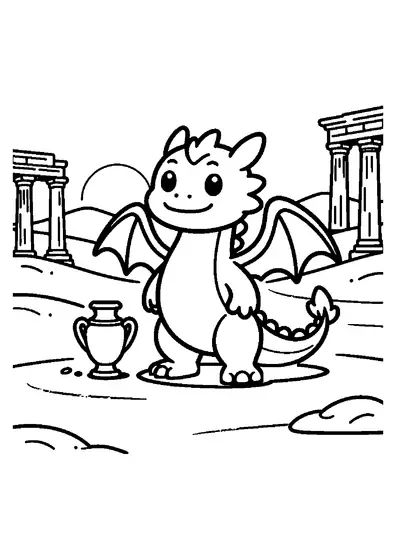
A winged dragon travels through the ancient stone arches of a forgotten desert fortress.

A4 format (landscape), black outlines on a white background · for home and classroom use
All coloring pages: Dragon Coloring Pages
Similar coloring pages: Dragon Coloring Pages



What else can you print? Free, no account needed
Custom Name Coloring Pages
Enter your child's name to generate a custom coloring page featuring large outline letters to color and decorate.
Open generator →Connect the Dots Generator
Eight connect-the-dots pictures across three difficulty levels. Features faint outline guides for younger children and dots only for older kids.
Open generator →Printables
Worksheets, tracing lines, mazes and dot-to-dots in A4.
Browse printables →
Winged Dragon Exploring Desert Fortress Ruins
Deep within an arid landscape, a winged dragon stands among the weathered ruins of a desert fortress. Large clay jars rest near crumbling arches and scattered stone blocks, framed by rolling sand dunes in the surrounding desert.
Ancient Desert Fortresses and Clay Storage
Ancient desert civilizations built fortresses from sun-dried mud bricks and heavy stone to keep interior spaces cool during scorchingly hot days. Large earthenware jars were essential tools for survival, storing precious water, grain, and olive oil in desert climates. Over centuries, wind and drifting sand gradually shape these deserted stone structures into dramatic historical ruins.
Shades of Arid Desert Environments
- Winged dragon wings: copper orange, sunbaked red, or golden yellow
- Desert sand dunes: pale cream, warm ochre, or reddish golden tan
- Fortress stone blocks: weathered beige, terracotta brown, or sandstone gray
- Large clay jar: burnt sienna, earthenware orange, or dark terracotta
- Fortress arches: dusty tan or shadow gray