
Dragon by an Ancient Stone Stele
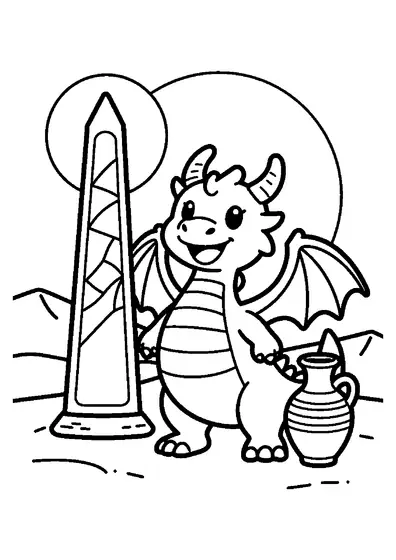
A dragon visits an arid desert landmark surrounded by a carved stone stele, sweeping sand dunes, and ancient ruins.

A4 format (portrait), black outlines on a white background · for home and classroom use
All coloring pages: Dragon Coloring Pages
Similar coloring pages: Dragon Coloring Pages





What else can you print? Free, no account needed
Custom Name Coloring Pages
Enter your child's name to generate a custom coloring page featuring large outline letters to color and decorate.
Open generator →Connect the Dots Generator
Eight connect-the-dots pictures across three difficulty levels. Features faint outline guides for younger children and dots only for older kids.
Open generator →Printables
Worksheets, tracing lines, mazes and dot-to-dots in A4.
Browse printables →
Desert Monuments and Ancient Carved Stelae
Desert landscapes preserve stone monuments for thousands of years because dry climate conditions prevent rapid erosion caused by rain. A stele is an upright stone slab or pillar carved with commemorative inscriptions, relief figures, or historical declarations. Ancient civilizations erected stelae near trade routes and ruined city borders to mark significant historical boundaries or royal decrees.
Sand Dunes and Desert Environments
Sand dunes form when prevailing winds blow loose grains of quartz sand into growing mounds along open arid plains. Winds constantly reshape dune ridges, creating dramatic sweeping slopes that shift across the desert floor over long periods. Despite harsh daytime heat and cold nighttime temperatures, specialized desert flora and fauna adapt to survive with minimal rainfall.
Natural Colors of Desert Ruins and Landscapes
- Dragon scales: Sandstone brown, sunburst gold, or dark crimson in legends
- Carved stone stele: Sun-bleached tan, ochre beige, or weathered granite gray
- Sand dunes: Warm amber, pale mustard yellow, or reddish terracotta
- Ancient ruins: Dusty brown, dry clay red, or cracked stone ivory