
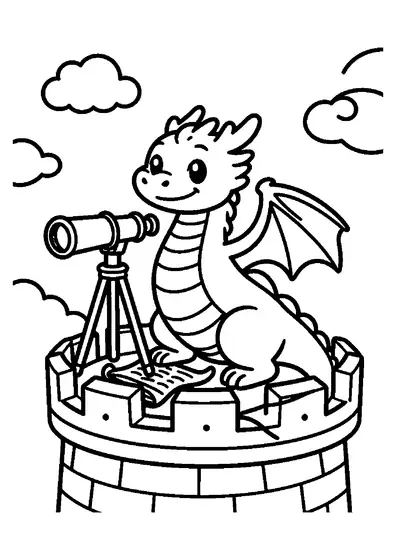
Dragon on a Castle Tower Roof
A small dragon perches high on a castle tower roof beside a large bronze bell.

A4 format (portrait), black outlines on a white background · for home and classroom use
All coloring pages: Dragon Coloring Pages
Similar coloring pages: Dragon Coloring Pages


What else can you print? Free, no account needed
Custom Name Coloring Pages
Enter your child's name to generate a custom coloring page featuring large outline letters to color and decorate.
Open generator →Connect the Dots Generator
Eight connect-the-dots pictures across three difficulty levels. Features faint outline guides for younger children and dots only for older kids.
Open generator →Printables
Worksheets, tracing lines, mazes and dot-to-dots in A4.
Browse printables →
Small Dragon on a Castle Tower Roof
High above the castle grounds, a small dragon stands on the roof of a tall tower next to a large bell. Detailed roof tiles cover the structure, while ancient battlements and neighboring towers rise into the sky nearby.
Castle Bells and Architectural Tower Roofs
Medieval castle towers contained heavy cast bells that signaled the time of day, warned residents of danger, or celebrated important events. Castle roofs were constructed with durable terracotta tiles or slate shingles to withstand harsh winds and heavy rain. Battlements along tower tops provided protected lookout points for watching the surrounding countryside.
Historic Colors of Medieval Towers
- Small dragon scales: vibrant purple, royal blue, or fiery ruby red
- Castle roof tiles: terracotta orange, dark slate gray, or weathered clay brown
- Large castle bell: tarnished bronze, aged copper green, or dark metallic brown
- Tower stone battlements: limestone beige, granite gray, or warm sand brown
- Neighboring towers: muted stonework gray with slate blue roofing