
Dragon by a Canyon River
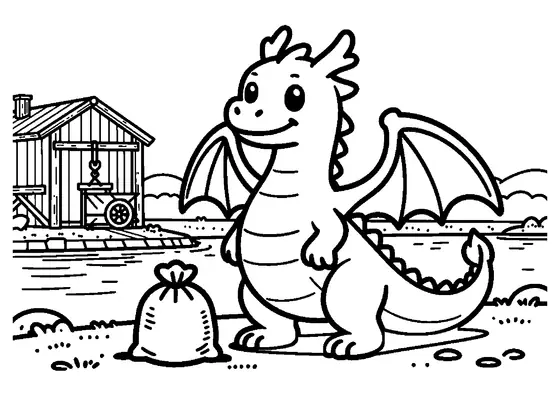
A spiky dragon rests beside a fallen log on the sandy shore of a winding canyon river.

A4 format (landscape), black outlines on a white background · for home and classroom use
All coloring pages: Dragon Coloring Pages
Similar coloring pages: Dragon Coloring Pages



What else can you print? Free, no account needed
Custom Name Coloring Pages
Enter your child's name to generate a custom coloring page featuring large outline letters to color and decorate.
Open generator →Connect the Dots Generator
Eight connect-the-dots pictures across three difficulty levels. Features faint outline guides for younger children and dots only for older kids.
Open generator →Printables
Worksheets, tracing lines, mazes and dot-to-dots in A4.
Browse printables →
Spiky Dragon Resting by a Canyon River
Beside a calm river flowing through a wide canyon, a spiky dragon rests on a sandy bank. A weathered wooden log lies near the water's edge, surrounded by tall layered rock formations that define the canyon landscape.
How Rivers Carve Vast Rock Canyons
Canyons form over millions of years as flowing river water gradually cuts down through solid bedrock. The distinct rock layers visible along canyon walls represent different geological eras and sedimentary deposits. Fallen logs along riverbanks provide vital habitats for fish, birds, and small animals while slowing down bank erosion.
Colors of Canyon Rivers and Rocks
- Spiky dragon scales: moss green, sandy beige, or deep amber
- Canyon river water: clear teal blue, muddy brown, or sky blue reflection
- Layered rock formations: rust red, sandstone orange, buff yellow, and slate gray
- Sandy river bank: warm tan, pale gold, or coarse beige
- Weathered river log: dark driftwood gray or damp oak brown