
Dragon on a Monastery Terrace
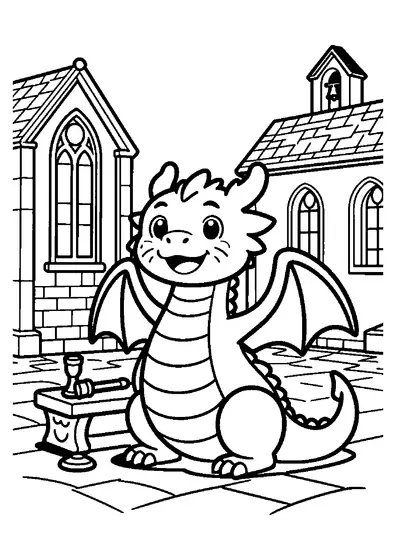
A long-necked dragon stands outdoors on a snowy mountain monastery terrace near a large ceremonial bell and drum.

A4 format (landscape), black outlines on a white background · for home and classroom use
All coloring pages: Dragon Coloring Pages
Similar coloring pages: Dragon Coloring Pages




What else can you print? Free, no account needed
Custom Name Coloring Pages
Enter your child's name to generate a custom coloring page featuring large outline letters to color and decorate.
Open generator →Connect the Dots Generator
Eight connect-the-dots pictures across three difficulty levels. Features faint outline guides for younger children and dots only for older kids.
Open generator →Printables
Worksheets, tracing lines, mazes and dot-to-dots in A4.
Browse printables →
Long-Necked Dragon at a Mountain Monastery
A gentle dragon with a slender neck stays outdoors on the snow-covered terrace of a high mountain monastery. Beside the creature rest a large metal bell and a ceremonial drum. Fresh snow covers the outdoor stone platform, creating a serene winter scene high in the mountains.
Facts About Mountain Monastery Bells and Drums
Monasteries located high in mountain ranges often feature large hanging bells and wooden drums used to mark the time of day. The ringing of these heavy bronze bells can travel for miles across snowy alpine valleys. In many mountain cultures, sacred drums are played during quiet morning rituals and traditional seasonal festivals.
Real Colors of Mountain Elements
- Dragon skin: pale sky blue, soft teal, or muted moss green
- Monastery bell: aged bronze green, dark copper, or weathered iron gray
- Ceremonial drum: red painted wood with a tan leather drumhead
- Snowy terrace: pure white snow with cool blue shadows
- Monastery stone: dark slate gray or warm tan sandstone