
Utahraptor on a Rocky Ledge Above a Canyon
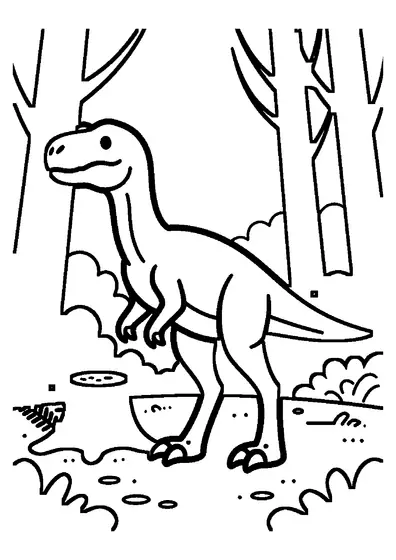
A huge Utahraptor stands above a canyon with its arms spread and a sickle claw in view.

A4 format (portrait), black outlines on a white background · for home and classroom use
All coloring pages: Dinosaur Coloring Pages
Similar coloring pages: Dinosaur Coloring Pages




What else can you print? Free, no account needed
Custom Name Coloring Pages
Enter your child's name to generate a custom coloring page featuring large outline letters to color and decorate.
Open generator →Connect the Dots Generator
Eight connect-the-dots pictures across three difficulty levels. Features faint outline guides for younger children and dots only for older kids.
Open generator →Printables
Worksheets, tracing lines, mazes and dot-to-dots in A4.
Browse printables →
Utahraptor on the rocky ledge
Utahraptor was an exceptionally large member of the dromaeosaur family, the group popularly known as raptors. Here it occupies a rocky ledge overlooking a canyon, with its forelimbs extended and its prominent curved foot claw visible. Its deep skull, strong legs, long balancing tail, and powerful build distinguished it from smaller relatives.
Interesting facts about Utahraptor
This predator lived in what is now North America, and its fossils have been discovered in Utah. Unlike the small, lightly built image often associated with raptors, Utahraptor was a heavy and formidable hunter. Canyons develop as moving water and erosion gradually cut through layers of rock, revealing bands that formed at different times.
Natural colors for Utahraptor, rock, and canyon walls
- Utahraptor covering: its actual colors are unknown; earthy brown, russet, sandy tan, or dark gray would be credible possibilities
- Display feathers: black, chestnut, cream, or barred patterns similar to those of living birds
- Sickle claw: charcoal, dark brown, or horn-colored keratin
- Rocky ledge: sandstone red, ocher, tan, or weathered gray
- Canyon: layered shades of rust, brown, beige, and muted orange