
Protoceratops on a Sandy Desert Hill
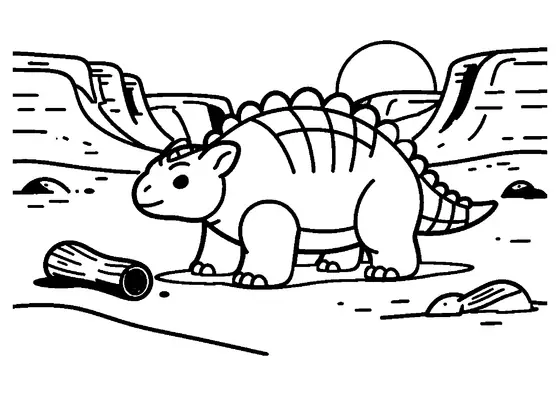
A small Protoceratops stands on a sandy hill in the desert landscape of its ancient homeland.

A4 format (landscape), black outlines on a white background · for home and classroom use
All coloring pages: Dinosaur Coloring Pages
Similar coloring pages: Dinosaur Coloring Pages



What else can you print? Free, no account needed
Custom Name Coloring Pages
Enter your child's name to generate a custom coloring page featuring large outline letters to color and decorate.
Open generator →Connect the Dots Generator
Eight connect-the-dots pictures across three difficulty levels. Features faint outline guides for younger children and dots only for older kids.
Open generator →Printables
Worksheets, tracing lines, mazes and dot-to-dots in A4.
Browse printables →
Protoceratops on a desert hill
Protoceratops was an early relative of the larger horned dinosaurs, yet it lacked the long facial horns associated with Triceratops. The animal had a parrotlike beak and a broad bony frill behind its head. This scene places it on a sandy rise in the Gobi Desert habitat where many important Protoceratops fossils have been found.
Lesser-known facts about Protoceratops
Its beak was useful for clipping tough vegetation, while teeth farther back in the jaws processed each bite. Several individuals have been discovered together, suggesting that these dinosaurs sometimes gathered in the same area. Desert dunes can shift with the wind, and rapidly moving sand may bury remains in conditions favorable for fossil preservation.
Real-world colors for Protoceratops and desert sand
- Protoceratops skin: its exact color remains unknown; sandy brown, tan, ocher, or muted rust would suit a dry environment
- Bony frill covering: earthy tones with darker patches or subtle bands are plausible, though no pattern has been confirmed
- Beak: cream, dull yellow-brown, dark brown, or charcoal keratin
- Claws: dark gray, brown, or horn-colored
- Sandy hill: pale gold, warm beige, reddish brown, or dusty orange