
Young Tyrannosaurus Watching a Small Beetle
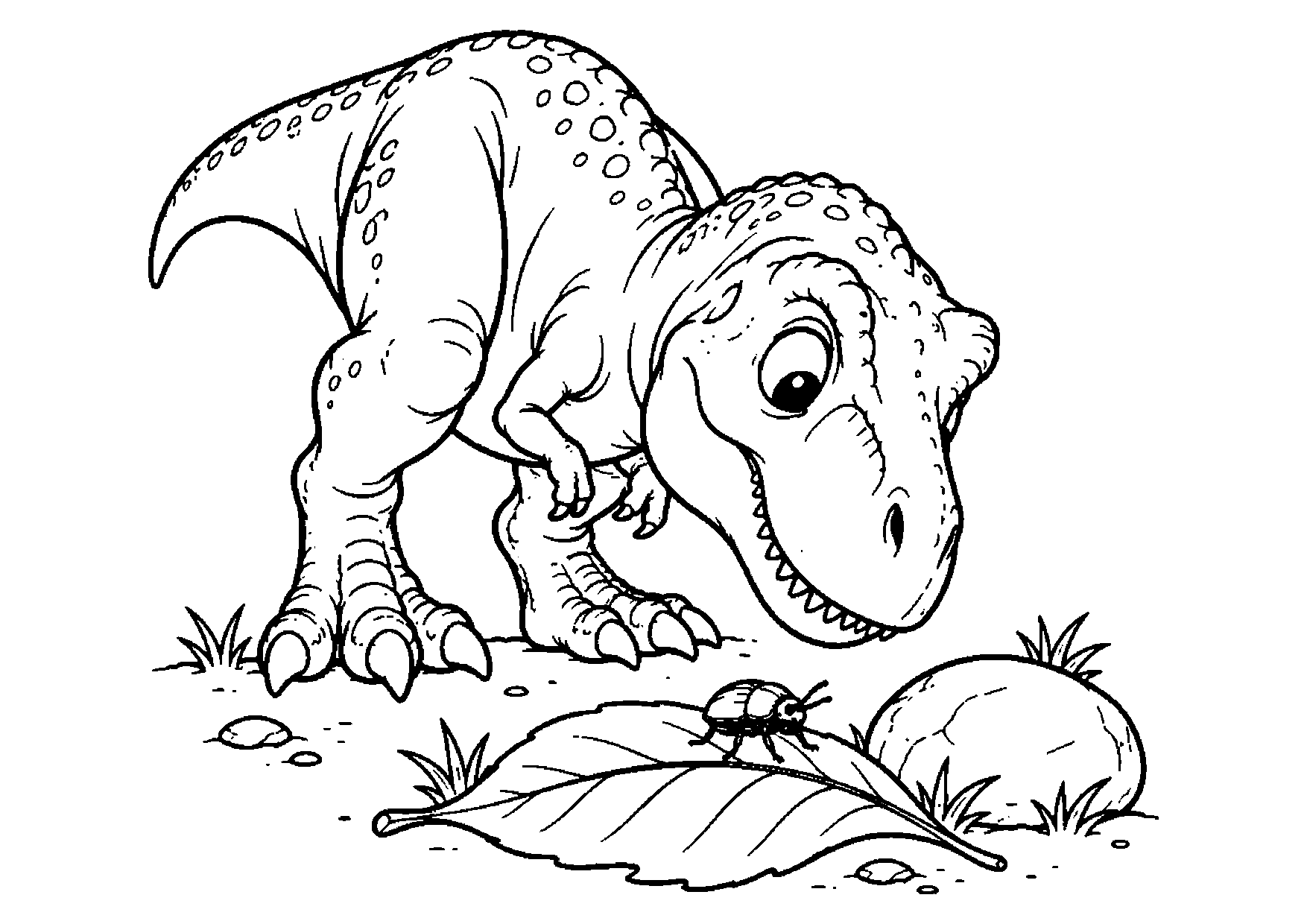
A curious young Tyrannosaurus crouches close to the ground and watches a small beetle walking across a broad fallen leaf.
A4 format (landscape), black outlines on a white background · for home and classroom use
All coloring pages: Predatory Dinosaur Coloring Pages
Similar coloring pages: Predatory Dinosaur Coloring Pages


What else can you print? Free, no account needed
Custom Name Coloring Pages
Enter your child's name to generate a custom coloring page featuring large outline letters to color and decorate.
Open generator →Connect the Dots Generator
Eight connect-the-dots pictures across three difficulty levels. Features faint outline guides for younger children and dots only for older kids.
Open generator →Printables
Worksheets, tracing lines, mazes and dot-to-dots in A4.
Browse printables →
A close look at a tiny beetle
The dinosaur lowers its head until it is near the ground, focusing on the much smaller insect in front of it. The beetle is shown on top of a wide fallen leaf, making it easy to spot. A smooth rounded stone lies beside the leaf. A few small pebbles and tufts of grass appear around the scene, while the rest of the background stays open. The contrast between the large young dinosaur and the tiny beetle makes the moment feel calm and observant rather than dramatic.
Tyrannosaurus facts
Tyrannosaurus rex was a large theropod dinosaur that lived about 68–66 million years ago near the end of the Cretaceous Period. Adults had a massive skull, powerful jaws, strong hind legs, and very short forelimbs with two fingers. Young tyrannosaurs grew rapidly and their body proportions changed as they matured. Fossils tell us a great deal about their bones and teeth, but scientists don't know the exact colors of Tyrannosaurus skin. Beetles are far older than Tyrannosaurus: beetle fossils are known from well before the Late Cretaceous.
Color ideas for the scene
- Try tan, brown, gray, or muted green for the young Tyrannosaurus.
- Make the fallen leaf olive, rust, golden brown, or dark green.
- Use black, chestnut, or deep brown for the small beetle.
- Give the smooth stone gray, beige, or sandy tones.
- Add a few natural greens to the grass tufts.