
Velociraptor on a Rocky Valley Slope
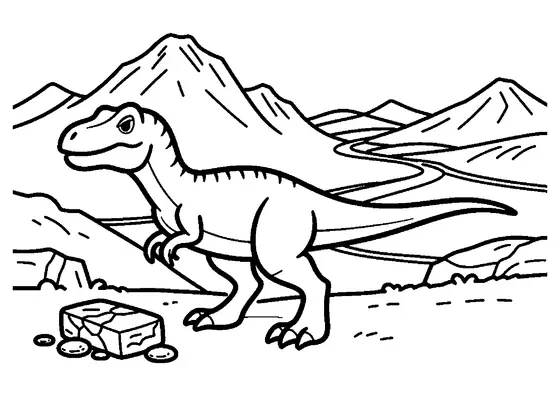
A swift Velociraptor sprints down a steep rocky valley slope near an exposed prehistoric fossil.

A4 format (landscape), black outlines on a white background · for home and classroom use
All coloring pages: Predatory Dinosaur Coloring Pages
Similar coloring pages: Predatory Dinosaur Coloring Pages


What else can you print? Free, no account needed
Custom Name Coloring Pages
Enter your child's name to generate a custom coloring page featuring large outline letters to color and decorate.
Open generator →Connect the Dots Generator
Eight connect-the-dots pictures across three difficulty levels. Features faint outline guides for younger children and dots only for older kids.
Open generator →Printables
Worksheets, tracing lines, mazes and dot-to-dots in A4.
Browse printables →
The Speedy Velociraptor in a Rocky Valley
The lightweight Velociraptor was built for high speed along rough terrain like steep valley inclines. Curved stone slopes provided natural footholds as this agile predator maneuvered past weathered rock formations. Exposed sediment layers along dried river valleys often contained ancient skeletal fossils preserved inside hardened stone walls.
Physical Features of Desert Valley Predators
Fossils discovered in arid valley formations show that Velociraptor was much smaller and more slender than modern movie depictions suggest. Feathers covered most of its body, providing insulation during temperature drops in desert habitats. Its long, stiff tail acted as a counterweight during rapid turns down steep inclines.
Color Patterns of Velociraptor and Valley Terrain
- Velociraptor plumage: Sandy tan, warm brown, or striped gray feathers
- Sickle claw: Dark slate black or polished horn brown
- Valley rock slope: Ochre, terracotta red, or pale sandstone gray
- Exposed fossil bone: Chalky white, tan, or mineralized dark gray