
Allosaurus Beside an Ancient Horsetail Grove
An Allosaurus with distinctive brow ridges stands next to a large boulder near an ancient horsetail grove.

A4 format (portrait), black outlines on a white background · for home and classroom use
All coloring pages: Predatory Dinosaur Coloring Pages
Similar coloring pages: Predatory Dinosaur Coloring Pages
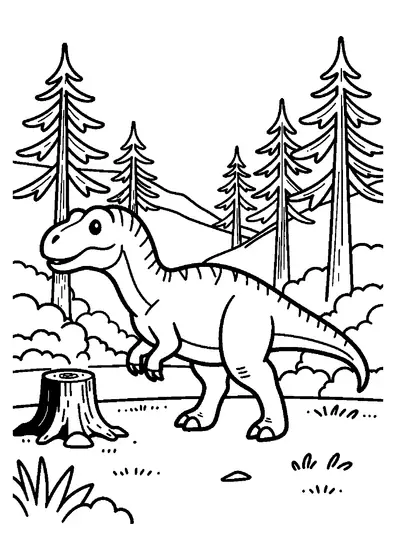
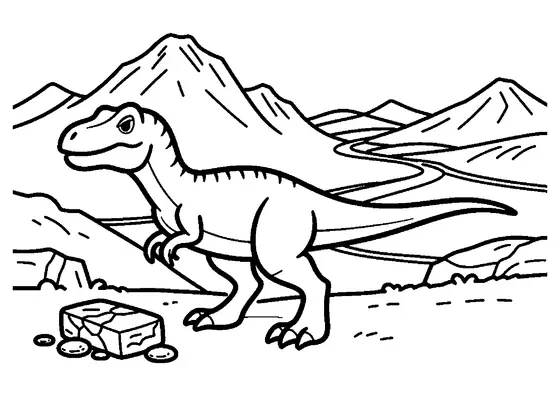
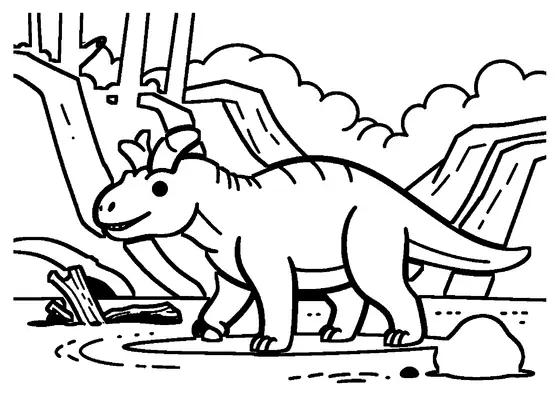
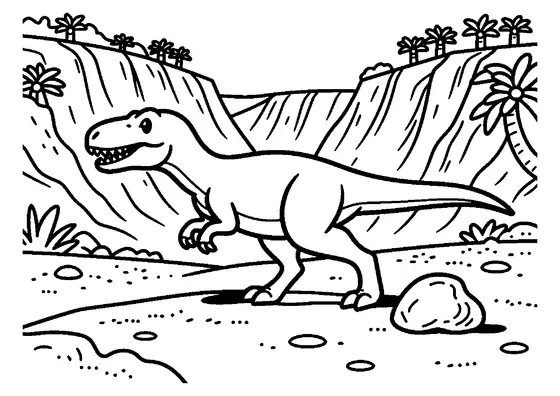


What else can you print? Free, no account needed
Custom Name Coloring Pages
Enter your child's name to generate a custom coloring page featuring large outline letters to color and decorate.
Open generator →Connect the Dots Generator
Eight connect-the-dots pictures across three difficulty levels. Features faint outline guides for younger children and dots only for older kids.
Open generator →Printables
Worksheets, tracing lines, mazes and dot-to-dots in A4.
Browse printables →
Allosaurus Standing Beside a Prehistoric Horsetail Grove
During the Late Jurassic period, Allosaurus reigned as one of the most widespread carnivores in North American floodplains. Moist soil surrounding riverbanks nurtured thick growths of primitive horsetail plants, creating green habitats near rocky outcroppings. Bony ridges positioned just above the eyes gave this apex predator a formidable facial structure.
Anatomical Traits of Morrison Formation Carnivores
Allosaurus featured a unique skull structure capable of expanding to swallow large pieces of meat. Primitive horsetails growing near water sources could reach heights of over twenty feet, resembling tall green bamboo stalks. The horn-like crests above the eyes were likely covered in keratin, serving as species markers or camouflage enhancements.
True Colors of Allosaurus and Riverbank Foliage
- Allosaurus body skin: Dark olive, slate gray, or dull brown scales
- Eye ridges and crests: Rust red or bright amber keratin coating
- Ancient horsetail stems: Bright lime green with segmented dark bands
- Nearby rock boulder: Weathered granite gray, brown, or mossy bronze