
Velociraptor on a Rocky Mountain Ledge
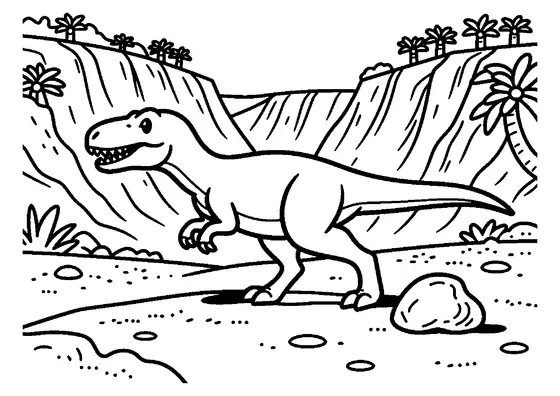
A swift velociraptor surveys its surrounding environment while standing high on a rocky ledge within a mountain landscape.

A4 format (landscape), black outlines on a white background · for home and classroom use
All coloring pages: Predatory Dinosaur Coloring Pages
Similar coloring pages: Predatory Dinosaur Coloring Pages
What else can you print? Free, no account needed
Custom Name Coloring Pages
Enter your child's name to generate a custom coloring page featuring large outline letters to color and decorate.
Open generator →Connect the Dots Generator
Eight connect-the-dots pictures across three difficulty levels. Features faint outline guides for younger children and dots only for older kids.
Open generator →Printables
Worksheets, tracing lines, mazes and dot-to-dots in A4.
Browse printables →
A Velociraptor Positioned on a High Mountain Ledge
A velociraptor stands atop a narrow rocky ledge high in a mountain terrain. The background landscape features rugged stone slopes and elevated mountain ridges.
Fossil Evidence and Habitats of Velociraptor
Fossil evidence indicates that velociraptors were agile predators that lived in dry, rocky environments and dune-covered regions during the Late Cretaceous period. High rocky ledges provided vantage points for predatory animals to observe prey moving through valleys below.
Natural Color Schemes for Velociraptors and Mountain Rocks
- Velociraptor body skin or plumage: Muted sand brown, striped tawny yellow, or dark olive
- Rocky ledge surface: Slate gray, charcoal stone, or granite brown
- Distant mountain ridges: Muted blue-gray, hazy purple, or dusty tan
- Dinosaur claws and talons: Dark charcoal, ebony black, or dark gray