
Tyrannosaurus Tracking Footprints on a Rocky Plateau
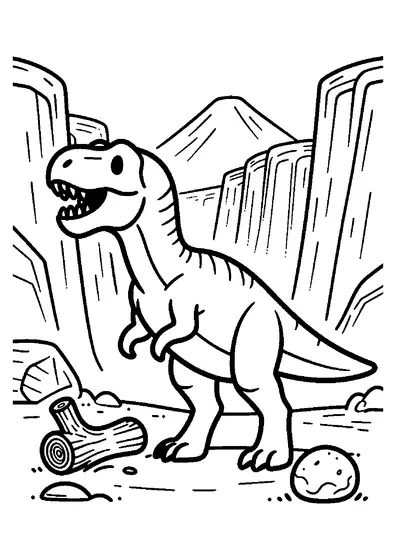
A powerful Tyrannosaurus inspects prehistoric footprints and a bone across a high plateau with a distant volcano.

A4 format (portrait), black outlines on a white background · for home and classroom use
All coloring pages: Predatory Dinosaur Coloring Pages
Similar coloring pages: Predatory Dinosaur Coloring Pages



What else can you print? Free, no account needed
Custom Name Coloring Pages
Enter your child's name to generate a custom coloring page featuring large outline letters to color and decorate.
Open generator →Connect the Dots Generator
Eight connect-the-dots pictures across three difficulty levels. Features faint outline guides for younger children and dots only for older kids.
Open generator →Printables
Worksheets, tracing lines, mazes and dot-to-dots in A4.
Browse printables →
Tyrannosaurus on a High Prehistoric Plateau
The mighty Tyrannosaurus traversed open, rugged environments high above ancient valleys. Elevated rock formations gave this massive apex predator a clear view across the surrounding landscape while tracking prey movement. In volcanic regions, exposed bedrock accumulated loose fossil bones and preserved deep fossilized footprints left by passing creatures.
Hunting Strategies and Volcanic Landscapes
Tyrannosaurus relied on powerful vision and an extraordinary sense of smell to locate distant carcasses or live prey across barren rock plateaus. Volcanic activity was common during the Late Cretaceous epoch, shaping dynamic landscapes covered with ash deposits and exposed stone beds. Fossilized tracks provide scientists with critical evidence regarding the walking speed and group behavior of large theropods.
Natural Tones for Tyrannosaurus and Plateau Scenery
- Tyrannosaurus hide: Earthy gray, mottled brown, or dark charcoal tone
- Rocky plateau stone: Weathered gray, reddish-tan, or buff slate
- Prehistoric bone: Off-white, ivory, or pale beige
- Background volcano peak: Dark basalt black with glowing orange or red lava accents