
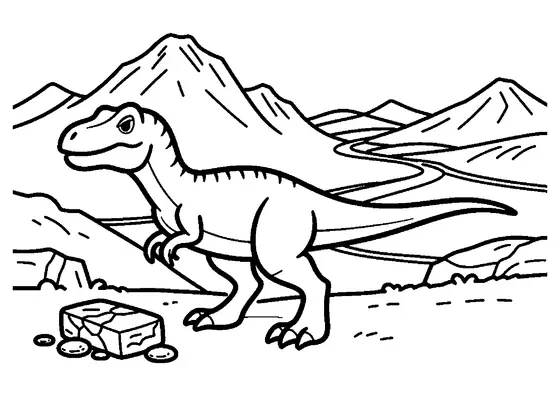
Spinosaurus on the Sandy Bank of a Prehistoric River
A massive sail-backed predatory dinosaur searches for prey along the wet shores of an ancient waterway.

A4 format (portrait), black outlines on a white background · for home and classroom use
All coloring pages: Predatory Dinosaur Coloring Pages
Similar coloring pages: Predatory Dinosaur Coloring Pages


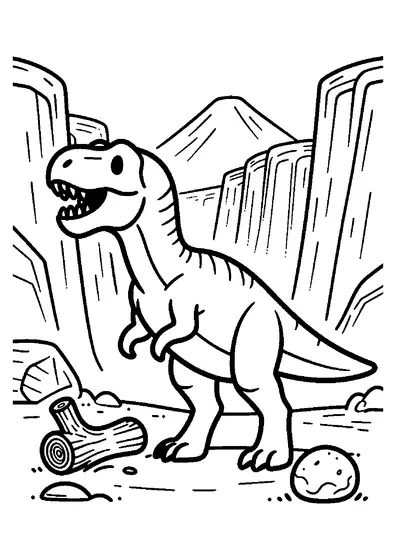


What else can you print? Free, no account needed
Custom Name Coloring Pages
Enter your child's name to generate a custom coloring page featuring large outline letters to color and decorate.
Open generator →Connect the Dots Generator
Eight connect-the-dots pictures across three difficulty levels. Features faint outline guides for younger children and dots only for older kids.
Open generator →Printables
Worksheets, tracing lines, mazes and dot-to-dots in A4.
Browse printables →
Spinosaurus Hunting along an Ancient River
Spinosaurus was a unique predatory dinosaur adapted to life in and around aquatic environments during the Cretaceous period. Standing along a sandy river bank, this large carnivore relied on its elongated snout and sharp conical teeth to capture fish and aquatic prey. The prominent dorsal sail supported by extended neural spines made this riverbank predator instantly recognizable among prehistoric creatures.
Semi-Aquatic Adaptations of Spinosaurus
Fossil evidence indicates that Spinosaurus possessed dense bones, paddle-like feet, and crocodile-like nostrils located high on its snout for easy breathing while swimming. Unlike most large theropods, it spent significant time hunting inside freshwater river systems and coastal deltas. The massive dorsal sail may have helped regulate body temperature or displayed dominance to rival dinosaurs along prehistoric shorelines.
Realistic Colors of Prehistoric Reptiles and Rivers
- Dinosaur skin: mottled olive green, sandy brown, or dark gray for concealment in mud
- Dorsal sail membrane: deep terracotta red, brownish orange, or patterned camouflage tones
- River bank sand: light beige, tan, or damp yellowish-brown earth
- Prehistoric river water: murky green-blue or deep teal with brown sediment reflections
- Claws and teeth: off-white ivory with dark root shading