
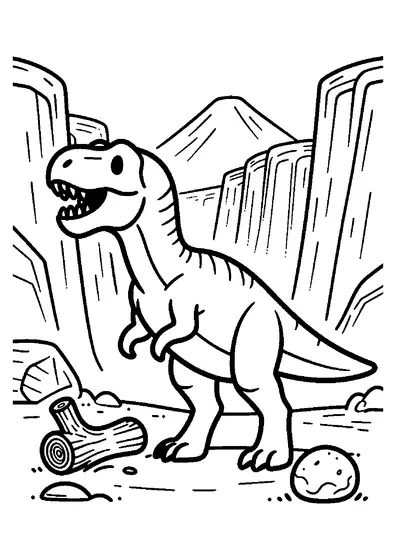
Roaring T. Rex Beside a Volcanic Crater
A roaring Tyrannosaurus rex stands near a volcanic crater with a steaming mountain peak rising in the background.

A4 format (portrait), black outlines on a white background · for home and classroom use
All coloring pages: Predatory Dinosaur Coloring Pages
Similar coloring pages: Predatory Dinosaur Coloring Pages




What else can you print? Free, no account needed
Custom Name Coloring Pages
Enter your child's name to generate a custom coloring page featuring large outline letters to color and decorate.
Open generator →Connect the Dots Generator
Eight connect-the-dots pictures across three difficulty levels. Features faint outline guides for younger children and dots only for older kids.
Open generator →Printables
Worksheets, tracing lines, mazes and dot-to-dots in A4.
Browse printables →
Roaring Tyrannosaurus Rex in Volcanic Terrain
A roaring Tyrannosaurus rex stands on rugged ground adjacent to an active volcanic crater. A steaming mountain peak looms in the distance above the harsh volcanic landscape inhabited by the apex predator.
Volcanic Habitats of the Cretaceous Period
During the Late Cretaceous period, intense volcanic activity shaped many regions across North America where Tyrannosaurus rex lived. Volcanic ash enriched the surrounding soil, fostering lush plant growth in low-lying basins despite occasional eruptions. Geothermal vents and steaming peaks were common features in these dynamic prehistoric environments.
Authentic Colors of Tyrannosaurus Rex and Volcanic Regions
- Tyrannosaurus rex hide: dark olive green, charcoal gray, or deep brown
- Volcanic crater rocks: dark basalt black, ash gray, and burnt rust
- Steaming volcanic peak: dark stone gray with white steam plumes
- Volcanic soil: dark charcoal brown and soot black