
Velociraptor on an Ancient Sand Dune
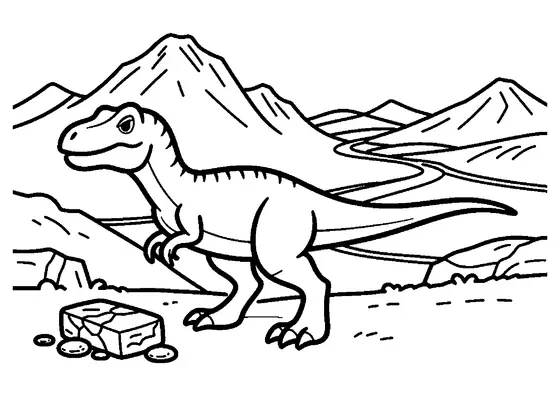
A prehistoric scene shows a swift velociraptor positioned atop a windblown sand dune near rocky terrain.

A4 format (landscape), black outlines on a white background · for home and classroom use
All coloring pages: Predatory Dinosaur Coloring Pages
Similar coloring pages: Predatory Dinosaur Coloring Pages



What else can you print? Free, no account needed
Custom Name Coloring Pages
Enter your child's name to generate a custom coloring page featuring large outline letters to color and decorate.
Open generator →Connect the Dots Generator
Eight connect-the-dots pictures across three difficulty levels. Features faint outline guides for younger children and dots only for older kids.
Open generator →Printables
Worksheets, tracing lines, mazes and dot-to-dots in A4.
Browse printables →
Velociraptor in a Prehistoric Desert Habitat
Velociraptors lived during the Late Cretaceous period in arid environments featuring extensive sand dunes and rocky outcrops. These bipedal dinosaurs navigated dry land with agility, using their slender bodies and long tails to maintain balance across uneven ground. Rocks and sandy elevations provided vantage points for observing surrounding terrain.
Adaptations of Desert Dinosaurs
Fossil evidence shows that the desert regions of ancient Asia were home to diverse reptilian species adapted to warm climates. Velociraptors possessed feathered bodies that helped regulate internal temperature during hot desert days and cooler nights. Their lightweight skeleton allowed them to move quickly over loose sand without sinking.
Natural Colors of Velociraptor and Desert Dunes
- Velociraptor feathers: Earthy brown, sandy yellow, or muted olive green
- Velociraptor claw: Dark gray or charcoal black
- Sand dune: Pale yellow, warm beige, or golden tan
- Desert rocks: Reddish brown, dark gray, or terra cotta