
Gallimimus Discovers a Giant Feather
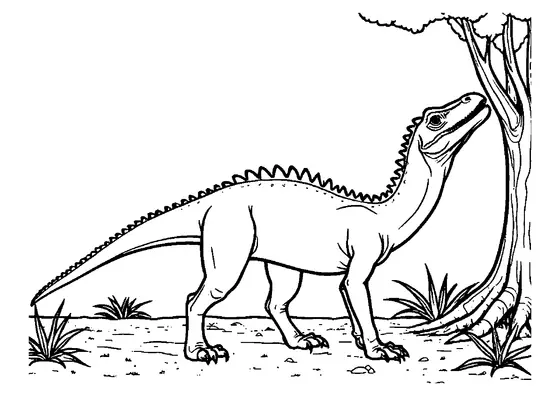
A slender Gallimimus stands beside an unusually large bird feather resting near its feet.

A4 format (portrait), black outlines on a white background · for home and classroom use
All coloring pages: Predatory Dinosaur Coloring Pages
Similar coloring pages: Predatory Dinosaur Coloring Pages


What else can you print? Free, no account needed
Custom Name Coloring Pages
Enter your child's name to generate a custom coloring page featuring large outline letters to color and decorate.
Open generator →Connect the Dots Generator
Eight connect-the-dots pictures across three difficulty levels. Features faint outline guides for younger children and dots only for older kids.
Open generator →Printables
Worksheets, tracing lines, mazes and dot-to-dots in A4.
Browse printables →
Gallimimus and the Giant Feather
The dinosaur is shown standing on level ground with its very long neck raised, a small head, powerful hind legs, and a lengthy tail. A large bird feather lies on the ground beside it. The scene focuses entirely on this encounter, without additional scenery or objects.
Surprising Facts About Gallimimus
Gallimimus belonged to a group of fast, lightly built dinosaurs whose bodies resembled those of modern flightless birds. Its long legs were well suited to running, while its toothless beak may have helped it gather several kinds of food. Scientists cannot yet say with certainty how much of its body was feathered.
Colors Gallimimus May Have Had
- Gallimimus skin: the exact color is unknown, but natural browns, tans, and muted greens are plausible choices
- Possible body feathers: their real colors are unknown and may have varied across the body
- Beak: the original color is unknown; modern bird beaks can be tan, gray, brown, or darker shades
- Eyes: not preserved in fossils, though dark brown or black is a reasonable natural interpretation
- Fallen bird feather: depending on the bird, it could naturally be white, brown, gray, black, or patterned