
Gigantoraptor Exploring a Cracked Rock
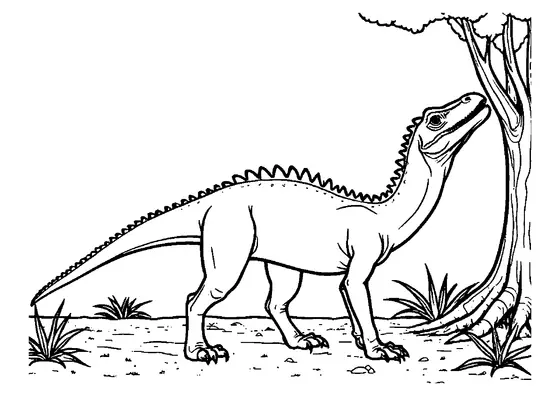
A Gigantoraptor stands upon a cracked foreground boulder with rocky hills and tufts of grass beyond it.

A4 format (portrait), black outlines on a white background · for home and classroom use
All coloring pages: Predatory Dinosaur Coloring Pages
Similar coloring pages: Predatory Dinosaur Coloring Pages



What else can you print? Free, no account needed
Custom Name Coloring Pages
Enter your child's name to generate a custom coloring page featuring large outline letters to color and decorate.
Open generator →Connect the Dots Generator
Eight connect-the-dots pictures across three difficulty levels. Features faint outline guides for younger children and dots only for older kids.
Open generator →Printables
Worksheets, tracing lines, mazes and dot-to-dots in A4.
Browse printables →
Gigantoraptor on a cracked boulder
The large dinosaur balances on a broken-looking rock at the front of a rugged landscape. Cracks divide the boulder's surface, while rocky rises and scattered clumps of grass extend into the background. The elevated position places Gigantoraptor above the uneven terrain around it.
Curious facts about Gigantoraptor and rocky ground
Gigantoraptor belonged to the oviraptorosaur group, whose members had beaked mouths rather than the long, toothed jaws seen in many other theropods. It was unusually large compared with most of its close relatives. Rocky surfaces can preserve tracks only under special conditions, usually when an animal first steps in soft sediment that later hardens into stone.
Possible colors of Gigantoraptor and its surroundings
- Gigantoraptor plumage: its exact appearance is unknown, but related dinosaurs support a feathered reconstruction in natural browns, tans, blacks, or patterned combinations
- Beak and claws: keratin may have been cream, horn-brown, dark gray, or black
- Eyes: a dark pupil with an iris in brown, amber, or another subdued animal color is plausible
- Cracked boulder and rocky hills: common rock tones include sandstone tan, rust brown, slate gray, and charcoal
- Grass tufts: fresh growth is usually green, while dry blades become straw yellow or pale brown