
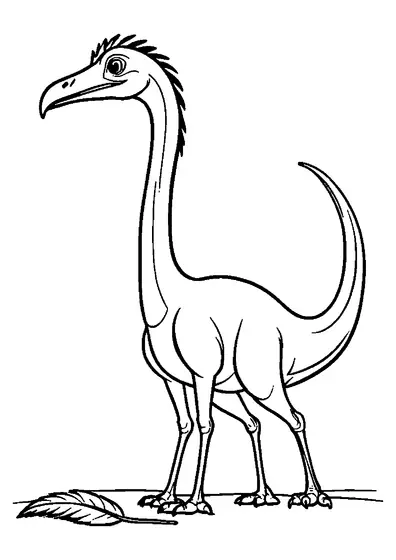
Velociraptor Examining a Three-Toed Track
A watchful Velociraptor examines a three-toed track pressed into sandy ground.

A4 format (portrait), black outlines on a white background · for home and classroom use
All coloring pages: Predatory Dinosaur Coloring Pages
Similar coloring pages: Predatory Dinosaur Coloring Pages




What else can you print? Free, no account needed
Custom Name Coloring Pages
Enter your child's name to generate a custom coloring page featuring large outline letters to color and decorate.
Open generator →Connect the Dots Generator
Eight connect-the-dots pictures across three difficulty levels. Features faint outline guides for younger children and dots only for older kids.
Open generator →Printables
Worksheets, tracing lines, mazes and dot-to-dots in A4.
Browse printables →
Velociraptor Investigating a Footprint
The dinosaur studies the track while remaining attentive to its surroundings. Its long tail extends behind the body, and its grasping forelimbs end in sharp claws. The three-toed impression in the sand provides a clue that another animal has passed through the area.
Clues Left by Dinosaur Tracks
Fossil footprints can reveal details that bones alone cannot, including how an animal placed its feet and whether it was walking or running. A sequence of tracks may also show changes in direction or speed. Velociraptor itself had a raised, curved claw on each second toe, so not every toe necessarily pressed into the ground in the same way.
Possible Colors in the Scene
- Velociraptor feathers: the actual colors are unknown; brown, tan, gray, rust, or mottled patterns are plausible
- Wing-like forelimb feathers: unknown, though contrasting bars or darker tips occur in many modern birds
- Facial skin and snout: muted brown, gray, or olive would be natural possibilities
- Claws: keratin sheaths are commonly dark brown, gray, or black in living animals
- Sandy ground: usually beige, golden tan, reddish brown, or pale gray depending on its minerals