
Dryptosaurus Finds a Forest Feather
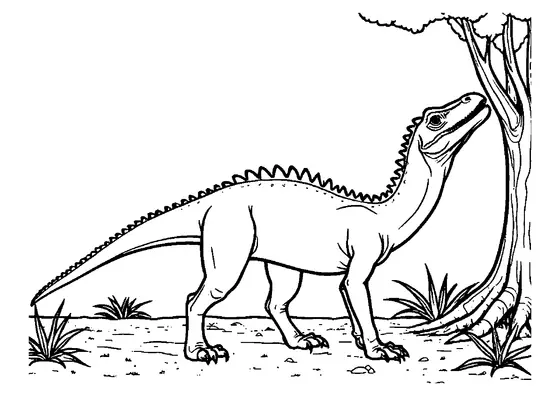
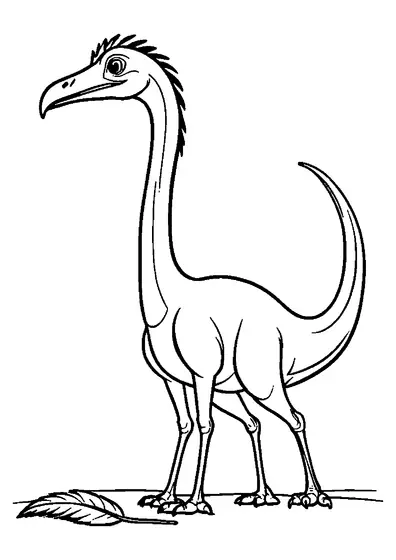
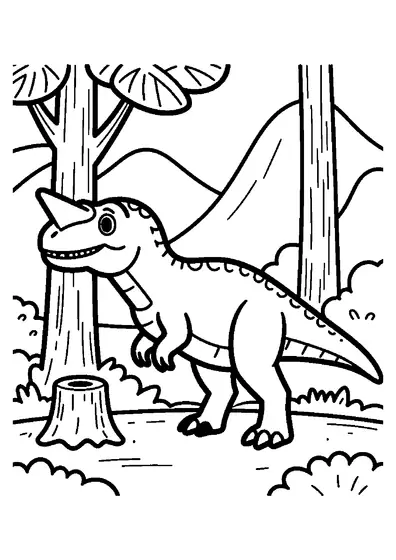
A young Dryptosaurus turns toward a feather lying among giant leaves on the prehistoric forest floor.

A4 format (portrait), black outlines on a white background · for home and classroom use
All coloring pages: Predatory Dinosaur Coloring Pages
Similar coloring pages: Predatory Dinosaur Coloring Pages


What else can you print? Free, no account needed
Custom Name Coloring Pages
Enter your child's name to generate a custom coloring page featuring large outline letters to color and decorate.
Open generator →Connect the Dots Generator
Eight connect-the-dots pictures across three difficulty levels. Features faint outline guides for younger children and dots only for older kids.
Open generator →Printables
Worksheets, tracing lines, mazes and dot-to-dots in A4.
Browse printables →
Dryptosaurus Finds a Forest Feather
The young predator stands at the center of the scene, facing right and looking down at the fallen feather. Large prehistoric plants and leaves rise along both sides. The open forest floor keeps the dinosaur and its discovery at the heart of the moment.
Feathers in a Prehistoric Forest
A loose feather can fall naturally when an animal molts, preens, or brushes against vegetation. Fossils show that feathers were not limited to modern birds, although direct evidence for the exact covering of Dryptosaurus remains incomplete. Forest litter can sometimes bury delicate remains quickly, but feathers rarely survive long enough to become fossils.
Natural Colors of Dryptosaurus and the Forest
- Dryptosaurus skin or body covering: its true appearance is unknown; browns, muted greens, rust tones, or dark patterns are plausible
- Eyes: dark brown, amber, or nearly black
- Claws: dark gray, brown, or a pale horn shade
- Fallen feather: real feathers occur in black, brown, gray, cream, white, and many patterned combinations
- Prehistoric leaves: light green, deep green, yellow-green, or brown where they are dry