
Carnotaurus on a Volcanic Trail Among Cycads
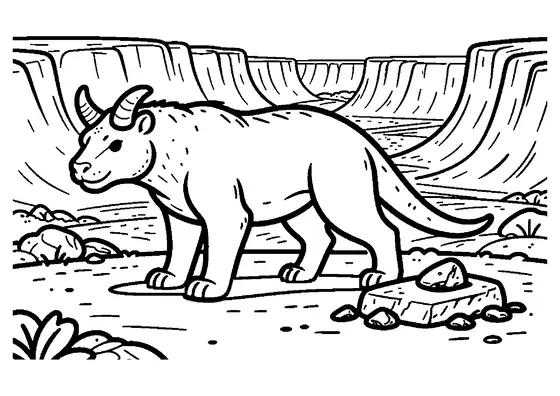
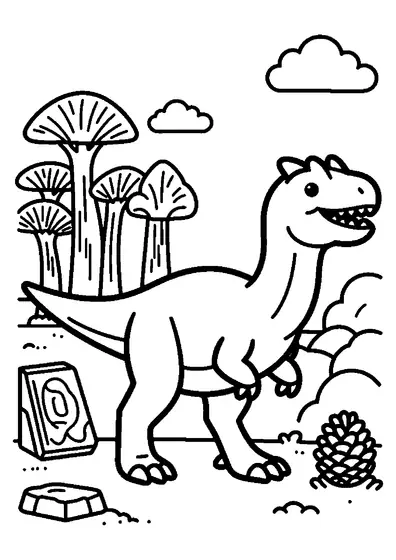
A short-snouted Carnotaurus with thick brow horns treads along a rocky volcanic trail surrounded by ancient cycads.

A4 format (landscape), black outlines on a white background · for home and classroom use
All coloring pages: Predatory Dinosaur Coloring Pages
Similar coloring pages: Predatory Dinosaur Coloring Pages


What else can you print? Free, no account needed
Custom Name Coloring Pages
Enter your child's name to generate a custom coloring page featuring large outline letters to color and decorate.
Open generator →Connect the Dots Generator
Eight connect-the-dots pictures across three difficulty levels. Features faint outline guides for younger children and dots only for older kids.
Open generator →Printables
Worksheets, tracing lines, mazes and dot-to-dots in A4.
Browse printables →
Carnotaurus Traversing a Volcanic Cycad Trail
Carnotaurus moved across the warm volcanic landscapes of prehistoric South America during the Late Cretaceous epoch. Primitive cycad plants with palm-like leaves grew along nutrient-rich ash trails where these unusual predators prowled. Thick, bull-like horns extending horizontally above the eyes set this short-faced theropod apart from every other meat-eater.
Unique Features of the Meat-Eating Bull
Fossil skin impressions of Carnotaurus reveal a bumpy texture composed of small non-overlapping scales and larger conical bumps along its flanks. Its short skull and tiny, functionless arms were distinct evolutionary adaptations for open-terrain pursuit. Cycads thrived in warm environments, producing tough fronds that dominated prehistoric underbrush.
Natural Colors of Carnotaurus and Volcanic Flora
- Carnotaurus skin: Dusty reddish-brown, charcoal gray, or tan with dark spots
- Brow horns: Off-white, horn brown, or dark ebony
- Cycad foliage: Glossy dark green leaves with brownish trunk scales
- Volcanic trail ground: Dark basalt gray, reddish ash, or burnt orange stone