
Dilophosaurus at the Edge of a Petrified Forest
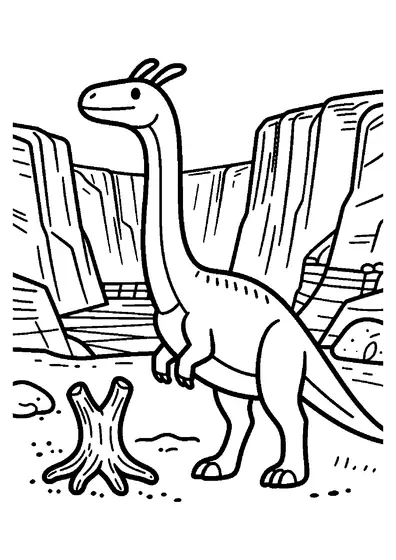
A Dilophosaurus with long double cranial crests stands at the border of an ancient forest near petrified tree trunks.

A4 format (portrait), black outlines on a white background · for home and classroom use
All coloring pages: Predatory Dinosaur Coloring Pages
Similar coloring pages: Predatory Dinosaur Coloring Pages



What else can you print? Free, no account needed
Custom Name Coloring Pages
Enter your child's name to generate a custom coloring page featuring large outline letters to color and decorate.
Open generator →Connect the Dots Generator
Eight connect-the-dots pictures across three difficulty levels. Features faint outline guides for younger children and dots only for older kids.
Open generator →Printables
Worksheets, tracing lines, mazes and dot-to-dots in A4.
Browse printables →
Dilophosaurus Standing Near Petrified Tree Trunks
Dilophosaurus inhabited North American river basins where fallen timber gradually mineralized into hard stone formations. Standing beside massive petrified tree trunks, this Early Jurassic predator surveyed open woodland boundaries for movement. Two thin, delicate bone crests ran parallel along the top of its long snout.
Geological Preservation and Jurassic Predators
Petrified wood forms when fallen trees are rapidly buried under mud and mineral-rich groundwater replaces organic tissue with quartz crystals over time. Dilophosaurus possessed slender jaws with a notable notch behind the front teeth, specialized for catching agile prey in coastal and floodplain regions.
Prehistoric Colors of Dilophosaurus and Mineralized Wood
- Dilophosaurus body: Patterned tawny brown, olive gray, or muted bronze
- Double skull crests: Bright coral red, yellow, or patterned orange
- Petrified tree bark: Mineral brown, rusty iron red, or banded agate gray
- Forest soil: Dark humic brown or sandy silt tan