
Carnotaurus at the Edge of a Volcanic Valley
A distinctively horned predator overlooks a broad valley with a billowing volcanic peak in the distance.

A4 format (portrait), black outlines on a white background · for home and classroom use
All coloring pages: Predatory Dinosaur Coloring Pages
Similar coloring pages: Predatory Dinosaur Coloring Pages
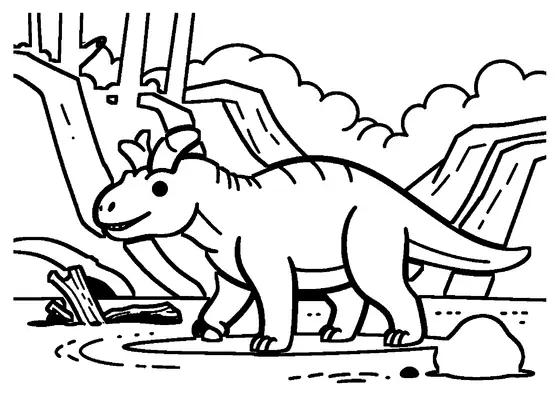
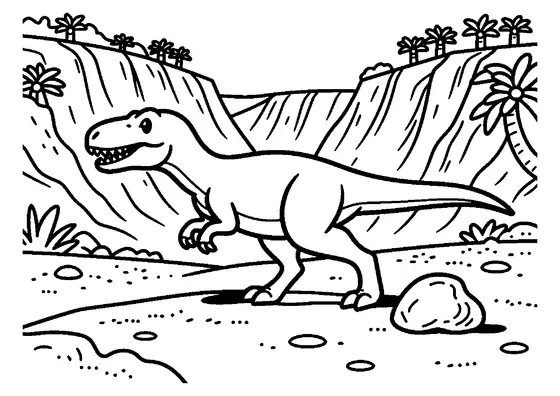

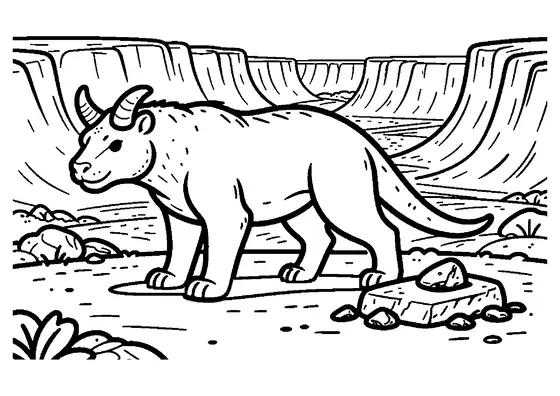


What else can you print? Free, no account needed
Custom Name Coloring Pages
Enter your child's name to generate a custom coloring page featuring large outline letters to color and decorate.
Open generator →Connect the Dots Generator
Eight connect-the-dots pictures across three difficulty levels. Features faint outline guides for younger children and dots only for older kids.
Open generator →Printables
Worksheets, tracing lines, mazes and dot-to-dots in A4.
Browse printables →
Carnotaurus in a Volcanic Valley Landscape
The horned Carnotaurus stands in a dramatic volcanic landscape filled with rugged terrain. Featuring two sharp horns on its head, the large theropod is positioned in a wide valley with a smoking volcano rising in the background.
Environmental Effects of Active Volcanism
Active volcanoes played a significant role in shaping Cretaceous ecosystems by depositing mineral-rich ash across surrounding valleys. Ash clouds ejected from volcanic vents could block solar radiation for weeks, temporarily altering local weather patterns and plant growth.
Natural Colors of Carnotaurus and Volcanic Scenery
- Carnotaurus skin texture: Dark charcoal gray, muddy brown, or deep rust tones.
- Head horns: Bleached bone white or dark ebony black.
- Volcanic ash and smoke: Soft slate gray, silver, and pale white billows.
- Volcanic valley soil: Dark basalt black, burnt sienna, and dark reddish-gray earth.