
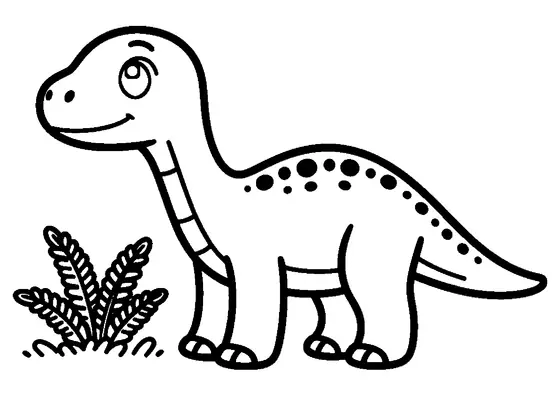
Monoclonius Next to a Fern
A young Monoclonius stands at an angle beside a single fern branch on the terrain.

A4 format (landscape), black outlines on a white background · for home and classroom use
All coloring pages: Herbivorous Dinosaur Coloring Pages
Similar coloring pages: Herbivorous Dinosaur Coloring Pages




What else can you print? Free, no account needed
Custom Name Coloring Pages
Enter your child's name to generate a custom coloring page featuring large outline letters to color and decorate.
Open generator →Connect the Dots Generator
Eight connect-the-dots pictures across three difficulty levels. Features faint outline guides for younger children and dots only for older kids.
Open generator →Printables
Worksheets, tracing lines, mazes and dot-to-dots in A4.
Browse printables →
Monoclonius Beside a Wild Fern Branch
This illustration features a Monoclonius positioned at an angled view alongside a single branch of a fern. The dinosaur has a single prominent horn on its nose and a short neck frill around the back of its head.
The Habitat and Features of Monoclonius
Monoclonius lived during the Late Cretaceous period, sharing coastal floodplain habitats with ancient ferns and conifers. Unlike its multi-horned relatives, Monoclonius possessed one major horn situated directly over its snout. Ferns were among the most widespread ground cover plants during this era, providing abundant food for herbivorous dinosaurs.
Real-Life Colors of Monoclonius
- Nose horn: Weathered off-white or dull gray
- Hide skin: Muted olive green, brown, or slate gray
- Fern frond: Bright emerald green or olive green
- Eyes: Warm dark amber or hazel