
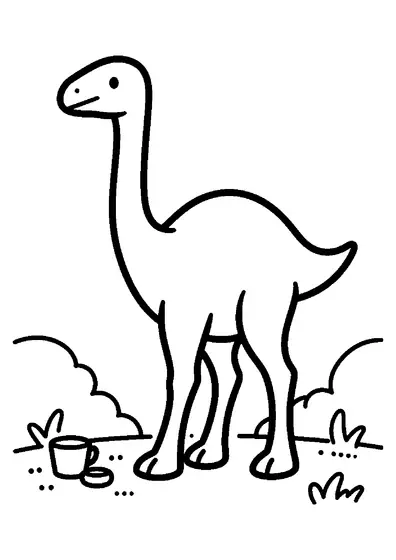
Gallimimus Running Through Grass
A swift dinosaur strides across open ground with long legs and a balanced tail.

A4 format (landscape), black outlines on a white background · for home and classroom use
All coloring pages: Herbivorous Dinosaur Coloring Pages
Similar coloring pages: Herbivorous Dinosaur Coloring Pages


What else can you print? Free, no account needed
Custom Name Coloring Pages
Enter your child's name to generate a custom coloring page featuring large outline letters to color and decorate.
Open generator →Connect the Dots Generator
Eight connect-the-dots pictures across three difficulty levels. Features faint outline guides for younger children and dots only for older kids.
Open generator →Printables
Worksheets, tracing lines, mazes and dot-to-dots in A4.
Browse printables →
Gallimimus Sprinting Over Open Grass
Gallimimus was a lightweight dinosaur built for speed across ancient plains. Its slender legs and horizontal tail allowed it to move rapidly while navigating grassy patches and open terrain in search of food.
Speed and Adaptation of the Ostrich Dinosaur
Gallimimus closely resembled modern flightless birds like ostriches due to its hollow bones and long limb proportions. Running across plains covered in early flowering plants and primitive grasses helped it escape larger predators. Paleontologists estimate that this creature was one of the fastest dinosaurs of its era, using its tail to maintain balance during sudden sharp turns.
Authentic Colors of Gallimimus
- Gallimimus body: sandy tan or light grayish yellow
- Slender legs and feet: dark brown or charcoal gray
- Horizontal tail: pale ochre with subtle stripes
- Open grass: vibrant green and straw yellow