
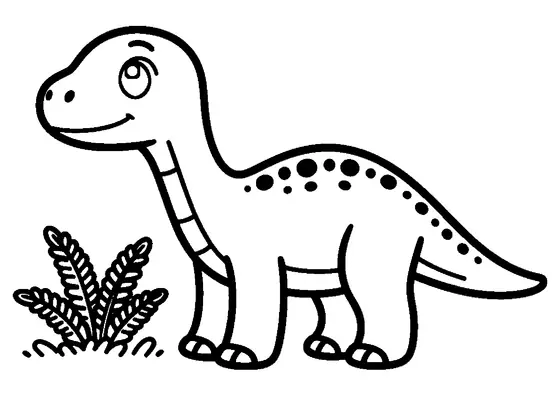
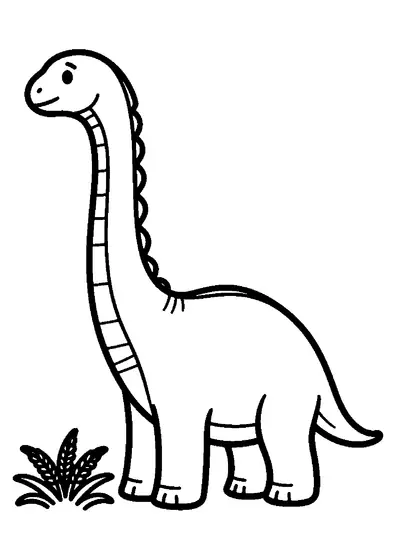
Dicraeosaurus Over a Fern
A distinctive spiny dinosaur lowers its neck toward lush ground ferns in an ancient forest.

A4 format (landscape), black outlines on a white background · for home and classroom use
All coloring pages: Herbivorous Dinosaur Coloring Pages
Similar coloring pages: Herbivorous Dinosaur Coloring Pages




What else can you print? Free, no account needed
Custom Name Coloring Pages
Enter your child's name to generate a custom coloring page featuring large outline letters to color and decorate.
Open generator →Connect the Dots Generator
Eight connect-the-dots pictures across three difficulty levels. Features faint outline guides for younger children and dots only for older kids.
Open generator →Printables
Worksheets, tracing lines, mazes and dot-to-dots in A4.
Browse printables →
Dicraeosaurus Feeding Above Low Ferns
Dicraeosaurus was a plant-eating dinosaur known for its relatively short neck, tall split spines along its spine, and long tapering tail. Unlike extremely tall sauropods, Dicraeosaurus focused its grazing on vegetation growing low to the ground. Dense fern thickets offered an abundant food source for this medium-sized herbivore.
Anatomical Features of Dicraeosaurus
The most striking feature of Dicraeosaurus was the series of Y-shaped neural spines extending along its neck and back. These spines may have supported muscular ridges or a protective skin sail while helping to stabilize the spine. Because its neck was shorter and more flexible downwards, it excelled at cropping ground-level plants rather than high tree leaves.
Natural Coloration of Dicraeosaurus and Ground Plants
- Dicraeosaurus hide: dark moss green or earthy gray-green for blending into forest shade
- Dicraeosaurus neck spines: pale brownish-tan or muted ochre
- Dicraeosaurus tail and underside: light grayish-beige
- Prehistoric fern: rich emerald green with lighter pale green tips