
Iguanodon with a Big Backpack
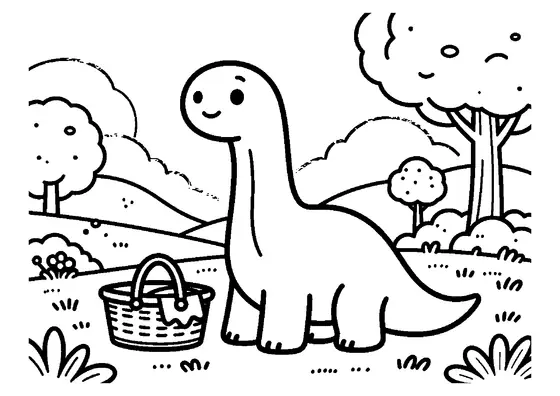
A friendly iguanodon pauses beside a large backpack along a scenic forest trail.

A4 format (portrait), black outlines on a white background · for home and classroom use
All coloring pages: Herbivorous Dinosaur Coloring Pages
Similar coloring pages: Herbivorous Dinosaur Coloring Pages



What else can you print? Free, no account needed
Custom Name Coloring Pages
Enter your child's name to generate a custom coloring page featuring large outline letters to color and decorate.
Open generator →Connect the Dots Generator
Eight connect-the-dots pictures across three difficulty levels. Features faint outline guides for younger children and dots only for older kids.
Open generator →Printables
Worksheets, tracing lines, mazes and dot-to-dots in A4.
Browse printables →
An Iguanodon Exploring a Forest Path
A young iguanodon stands beside a large backpack along a wide forest trail. Surrounded by woodland trees and an open trail environment, this plant-eating dinosaur is portrayed ready for outdoor exploration.
Prehistoric Forests and Iguanodon Trails
Iguanodon fossils have been discovered across Early Cretaceous rock layers in Europe, North America, and Asia. These versatile herbivores thrived in dense ancient forests filled with giant horsetails, conifers, and early flowering plants. Paleontologists suspect that iguanodon herds followed established forest tracks while migrating between feeding grounds.
Colors of Iguanodon and Forest Trail Gear
- Iguanodon skin: Earthy green, mottled brown, or gray-green
- Thumb spikes: Off-white, ivory, or pale tan
- Travel backpack: Canvas brown, forest green, or deep red
- Forest trail: Rich brown soil with green undergrowth