
Bajadasaurus by a Giant Pine Cone
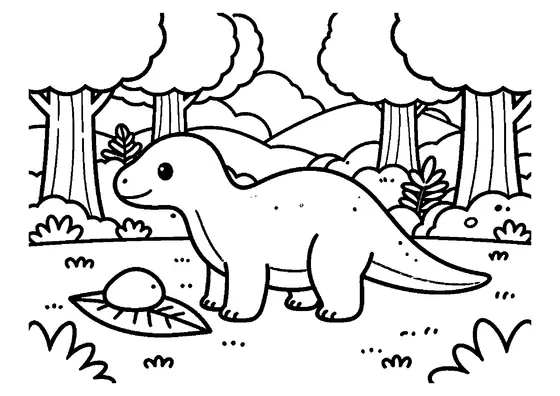
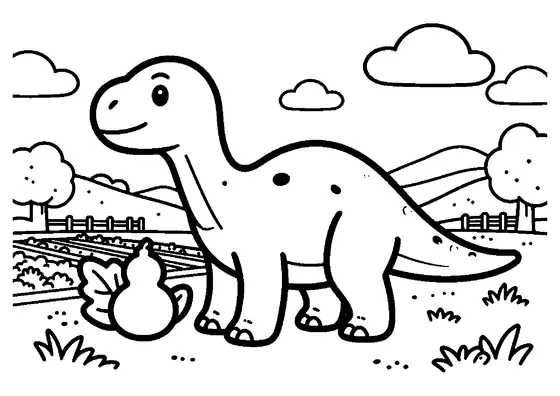
This scene features a prehistoric Bajadasaurus resting in a quiet forest clearing beside an unusually large pine cone.

A4 format (landscape), black outlines on a white background · for home and classroom use
All coloring pages: Herbivorous Dinosaur Coloring Pages
Similar coloring pages: Herbivorous Dinosaur Coloring Pages

What else can you print? Free, no account needed
Custom Name Coloring Pages
Enter your child's name to generate a custom coloring page featuring large outline letters to color and decorate.
Open generator →Connect the Dots Generator
Eight connect-the-dots pictures across three difficulty levels. Features faint outline guides for younger children and dots only for older kids.
Open generator →Printables
Worksheets, tracing lines, mazes and dot-to-dots in A4.
Browse printables →
Prehistoric Scenes with Bajadasaurus in the Forest
A long-necked Bajadasaurus spending time in a prehistoric woodland area surrounded by tall trees. Next to the herbivore lies a giant pine cone on the ground of the forest clearing. The surrounding landscape highlights a peaceful ancient ecosystem filled with lush vegetation and natural elements from millions of years ago.
Natural History of Bajadasaurus and Ancient Cones
Bajadasaurus was a sauropod dinosaur known for the long, forward-pointing spines extending along its neck, which likely served as defense against predators. Conifers and pine cones were already present during the Mesozoic Era, serving as essential food sources for various prehistoric creatures. Ancient forests provided dense canopy cover and rich plant life where large plant-eating dinosaurs gathered daily.
Real Colors of Prehistoric Dinosaurs and Forest Plants
- Bajadasaurus skin: Earthy shades of olive green, brownish gray, or muted tan to blend with forest vegetation
- Bajadasaurus neck spines: Dark brown or grayish black with lighter horn-like tips
- Giant pine cone: Deep reddish brown or warm chestnut brown when fully mature
- Prehistoric trees: Dark brown bark with vibrant emerald green needle foliage