
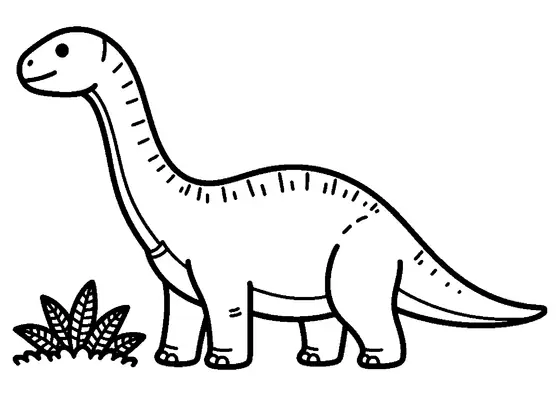
Diplodocus with a Long Tail
An elongated prehistoric sauropod stretches across the terrain as a Diplodocus rests on a patch of grass.

A4 format (landscape), black outlines on a white background · for home and classroom use
All coloring pages: Herbivorous Dinosaur Coloring Pages
Similar coloring pages: Herbivorous Dinosaur Coloring Pages



What else can you print? Free, no account needed
Custom Name Coloring Pages
Enter your child's name to generate a custom coloring page featuring large outline letters to color and decorate.
Open generator →Connect the Dots Generator
Eight connect-the-dots pictures across three difficulty levels. Features faint outline guides for younger children and dots only for older kids.
Open generator →Printables
Worksheets, tracing lines, mazes and dot-to-dots in A4.
Browse printables →
Diplodocus Standing on Grass
This illustration displays a full-bodied Diplodocus with its distinct small head, extended neck, and characteristic whip-like tail. The dinosaur stands grounded on a simple layer of grass covering the ground surface.
The Whip-Like Tail of Diplodocus
The extraordinary length of the Diplodocus tail contained over eighty individual vertebrae, tapering to a thin tip. Scientists hypothesize that flicking this massive appendage could produce a sonic boom loud enough to deter approaching predators or signal herd members.
Natural Color Palette for Diplodocus
- Thick skin: Muted olive-gray or dusty brown with subtle texture
- Underbody: Light tan or pale yellow belly
- Grass blades: Rich meadow green with lighter spring green highlights
- Claws: Off-white or light ivory tone on the feet