
Diplodocus with a Curved Tail
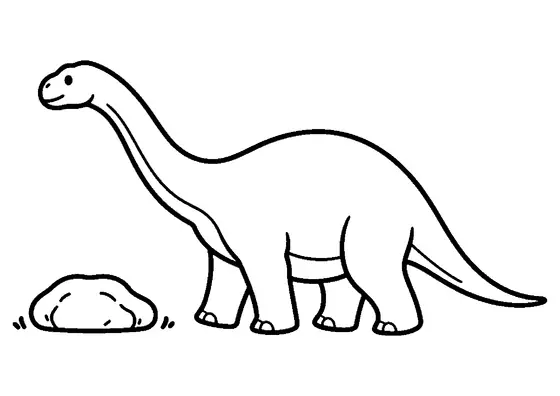
A slender Diplodocus stands in profile with an extended neck and a smoothly arching tail.

A4 format (landscape), black outlines on a white background · for home and classroom use
All coloring pages: Herbivorous Dinosaur Coloring Pages
Similar coloring pages: Herbivorous Dinosaur Coloring Pages


What else can you print? Free, no account needed
Custom Name Coloring Pages
Enter your child's name to generate a custom coloring page featuring large outline letters to color and decorate.
Open generator →Connect the Dots Generator
Eight connect-the-dots pictures across three difficulty levels. Features faint outline guides for younger children and dots only for older kids.
Open generator →Printables
Worksheets, tracing lines, mazes and dot-to-dots in A4.
Browse printables →
Diplodocus with a Sweeping Curved Tail
The side view of the Diplodocus showcases the extraordinary proportions of this giant herbivore. Its neck stretches outward from a heavy torso, while its long, slender tail arches gracefully toward the ground, balancing its vast body length.
Fascinating Facts About Diplodocus
Diplodocus possessed a whip-like tail made up of about eighty individual vertebrae. Computer simulations indicate that snapping the tip of this long tail could produce a loud cracking sound exceeding the speed of sound, scaring away approaching predators.
Real-World Colors of Diplodocus
- Upper body and neck: slate gray, earth green, or dark brown
- Lower stomach area: cream, light gray, or beige
- Back ridge scales: dark gray or moss green
- Legs and feet: mud brown or dark charcoal