
Dicraeosaurus with Low Spines
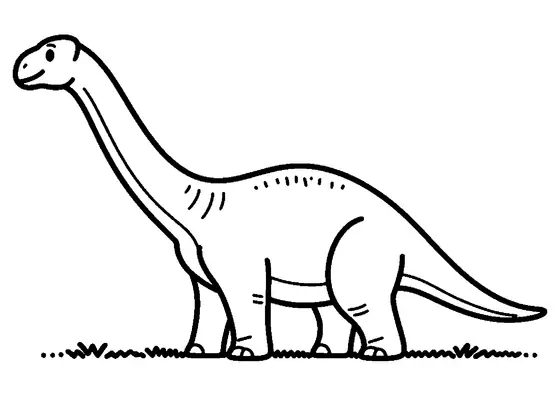
A smiling Dicraeosaurus dinosaur pauses peacefully while standing upright on open grassy ground.

A4 format (landscape), black outlines on a white background · for home and classroom use
All coloring pages: Herbivorous Dinosaur Coloring Pages
Similar coloring pages: Herbivorous Dinosaur Coloring Pages



What else can you print? Free, no account needed
Custom Name Coloring Pages
Enter your child's name to generate a custom coloring page featuring large outline letters to color and decorate.
Open generator →Connect the Dots Generator
Eight connect-the-dots pictures across three difficulty levels. Features faint outline guides for younger children and dots only for older kids.
Open generator →Printables
Worksheets, tracing lines, mazes and dot-to-dots in A4.
Browse printables →
Dicraeosaurus Resting on Green Grass
A cheerful Dicraeosaurus rests on a patch of grassy ground. This sauropod features a relatively short neck compared to its long whip-like tail, along with a distinct row of paired spines extending along its back.
Discoveries and Facts About Dicraeosaurus
Dicraeosaurus inhabited the tropical forests of East Africa during the Late Jurassic period. Unlike giant long-necked sauropods that fed high in tree canopies, this dinosaur specialized in grazing on plants near ground level. Its unusual back spines were connected by strong ligaments that supported head and neck movements.
Realistic Colors of Dicraeosaurus
- Upper hide and spines: Deep forest green or slate gray
- Underbelly and throat: Light cream or yellowish-tan
- Legs and feet: Earthy brown with pale claw surfaces
- Surrounding grass: Bright leaf green and dry yellow tones