
Gastonia with Spikes Along Its Sides
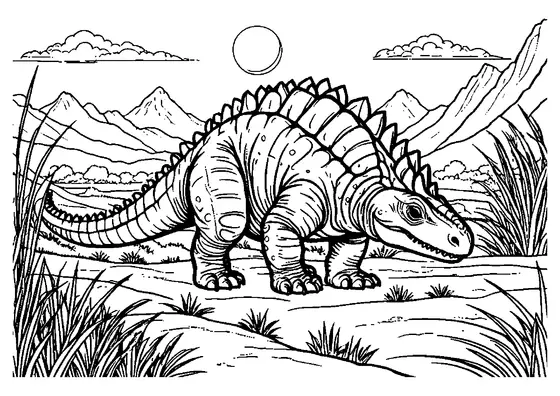
A cute cartoon Gastonia stands peacefully beside small patches of grass, showing off its large side spikes.

A4 format (landscape), black outlines on a white background · for home and classroom use
All coloring pages: Herbivorous Dinosaur Coloring Pages
Similar coloring pages: Herbivorous Dinosaur Coloring Pages



What else can you print? Free, no account needed
Custom Name Coloring Pages
Enter your child's name to generate a custom coloring page featuring large outline letters to color and decorate.
Open generator →Connect the Dots Generator
Eight connect-the-dots pictures across three difficulty levels. Features faint outline guides for younger children and dots only for older kids.
Open generator →Printables
Worksheets, tracing lines, mazes and dot-to-dots in A4.
Browse printables →
Gastonia Standing by Grass
The illustration depicts a cute cartoon Gastonia resting calmly on the ground near tufts of grass. The dinosaur has a low-built body covered in protective shoulder armor and prominent triangular spikes projecting along its sides.
Facts About Gastonia Environment
Gastonia lived in North America during the Early Cretaceous period in floodplains and semi-arid environments. It shared its habitat with early flowering plants, horsetails, and conifers, which formed its primary diet.
Realistic Colors of Gastonia
- Body armor: Slate gray, dark green, or earth brown
- Side spikes: Off-white, ivory, or pale gray
- Grass tufts: Natural green or olive green
- Eyes: Dark brown