
Pterodaustro Wading in a Shallow Lagoon
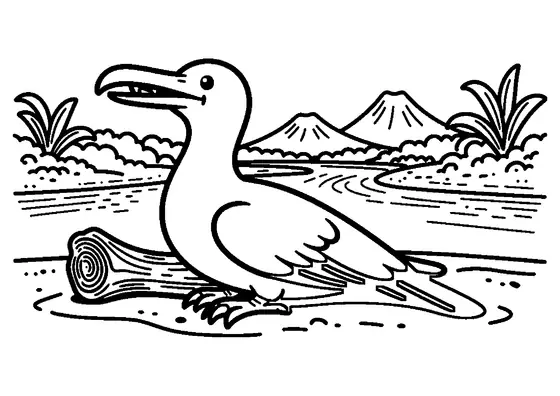
A filter-feeding Pterodaustro wades through shallow lagoon waters near tall wetland reeds.

A4 format (landscape), black outlines on a white background · for home and classroom use
All coloring pages: Flying and Sea Reptile Coloring Pages
Similar coloring pages: Flying and Sea Reptile Coloring Pages


What else can you print? Free, no account needed
Custom Name Coloring Pages
Enter your child's name to generate a custom coloring page featuring large outline letters to color and decorate.
Open generator →Connect the Dots Generator
Eight connect-the-dots pictures across three difficulty levels. Features faint outline guides for younger children and dots only for older kids.
Open generator →Printables
Worksheets, tracing lines, mazes and dot-to-dots in A4.
Browse printables →
Pterodaustro in Coastal Lagoons
This scene depicts Pterodaustro in a shallow lagoon setting surrounded by aquatic reeds. Lagoons provided quiet, low-energy water bodies where specialized flying reptiles could wade through gentle shallows in search of microscopic food.
The Unique Beak of Pterodaustro
Pterodaustro had a distinctive upward-curved lower jaw packed with thousands of bristle-like teeth. These bristle structures worked as a natural sieve, allowing the animal to scoop up muddy lagoon water and strain out tiny crustaceans and algae. Small, blunt teeth on the upper jaw then scraped the gathered food into its throat, functioning much like modern flamingos feeding in saline wetlands.
Real Colors of Pterodaustro
- Curved lower jaw: Dark grayish-black with pale yellowish bristle teeth
- Feathery body fibers: Soft grayish-pink or muted rose shades derived from eating brine crustaceans
- Wing membranes: Dusty brown or tan hide adapted for wetland environments
- Shallow water reeds: Deep green or dry brownish-yellow plant stems