
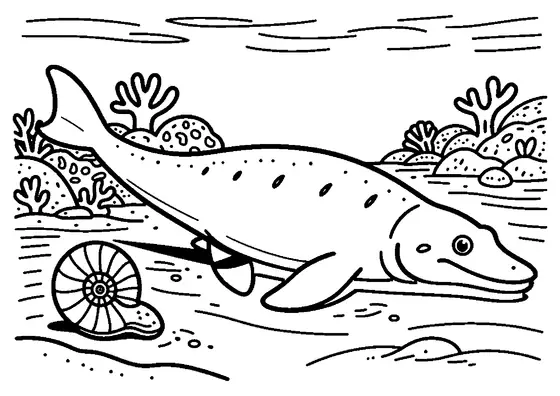
Mosasaurus Hunting Around a Coral Reef
A large ocean predator glides through shallow marine waters above broad plate corals and a spiraled nautilus shell.

A4 format (landscape), black outlines on a white background · for home and classroom use
All coloring pages: Flying and Sea Reptile Coloring Pages
Similar coloring pages: Flying and Sea Reptile Coloring Pages



What else can you print? Free, no account needed
Custom Name Coloring Pages
Enter your child's name to generate a custom coloring page featuring large outline letters to color and decorate.
Open generator →Connect the Dots Generator
Eight connect-the-dots pictures across three difficulty levels. Features faint outline guides for younger children and dots only for older kids.
Open generator →Printables
Worksheets, tracing lines, mazes and dot-to-dots in A4.
Browse printables →
Apex Marine Predator of Ancient Oceans
A powerful Mosasaurus propels itself through clear water directly above a vibrant coral reef. Near the sea floor, plate corals expand outward while a chambered nautilus drifts past the ancient seabed.
Prehistoric Reef Life and Ocean Dynamics
Mosasaurus was a dominant marine reptile adapted for swimming in shallow coastal environments where food was abundant. Ancient coral reefs supported a diverse ecosystem of invertebrates, providing hunting grounds for large aquatic reptiles. Chambered nautiluses swam in these warm seas long before modern marine life developed.
Natural Tones of Ocean Reptiles and Reefs
- Mosasaurus upper body: Dark navy blue, charcoal gray, or deep olive green
- Mosasaurus belly: Pale cream or white for countershading protection from below
- Plate corals: Soft orange, pinkish-purple, light green, or brownish tan
- Nautilus shell: Off-white shell with distinct reddish-brown stripes
- Sea bed sand: Light beige, pale yellow, or light gray sand