
Plesiosaur in an Underwater Cave
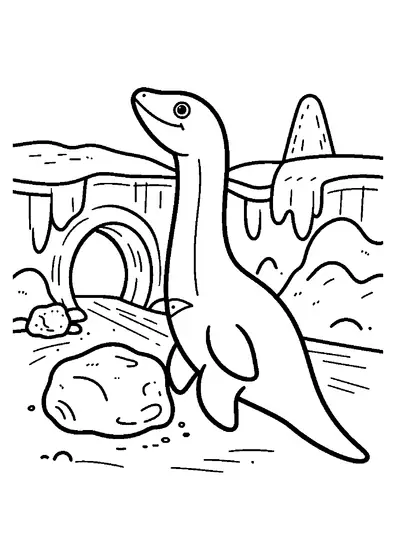
A long-necked plesiosaur swims gracefully through a spacious underwater rock cave filled with stone columns and sea life.

A4 format (portrait), black outlines on a white background · for home and classroom use
All coloring pages: Flying and Sea Reptile Coloring Pages
Similar coloring pages: Flying and Sea Reptile Coloring Pages



What else can you print? Free, no account needed
Custom Name Coloring Pages
Enter your child's name to generate a custom coloring page featuring large outline letters to color and decorate.
Open generator →Connect the Dots Generator
Eight connect-the-dots pictures across three difficulty levels. Features faint outline guides for younger children and dots only for older kids.
Open generator →Printables
Worksheets, tracing lines, mazes and dot-to-dots in A4.
Browse printables →
Plesiosaur Swimming Through a Submerged Cavern
Plesiosaurs were marine reptiles known for their elongated necks, small heads, and paddle-like flippers adapted for deep ocean swimming. In this underwater setting, the reptile glides past rock columns, a flat stone, a coiled ammonite shell, and a sandy sea floor.
Mysterious Underwater Cave Ecosystems
Submerged limestone caves offered prehistoric sea animals shelter from large open-ocean predators and strong water currents. Ancient marine caves often collected drifting shells like ammonites that settled onto the quiet, sandy cavern floor.
Natural Colors of Deep Underwater Cavities
- Plesiosaur body: dark slate gray or dark blue with a light belly
- Underwater cave roof: dark slate gray and olive green
- Ammonite shell: striped brown, tan, and pearlescent cream
- Sandy sea floor: pale yellow or beige sand