
Pteranodon Shaking a Water Drop from Its Beak
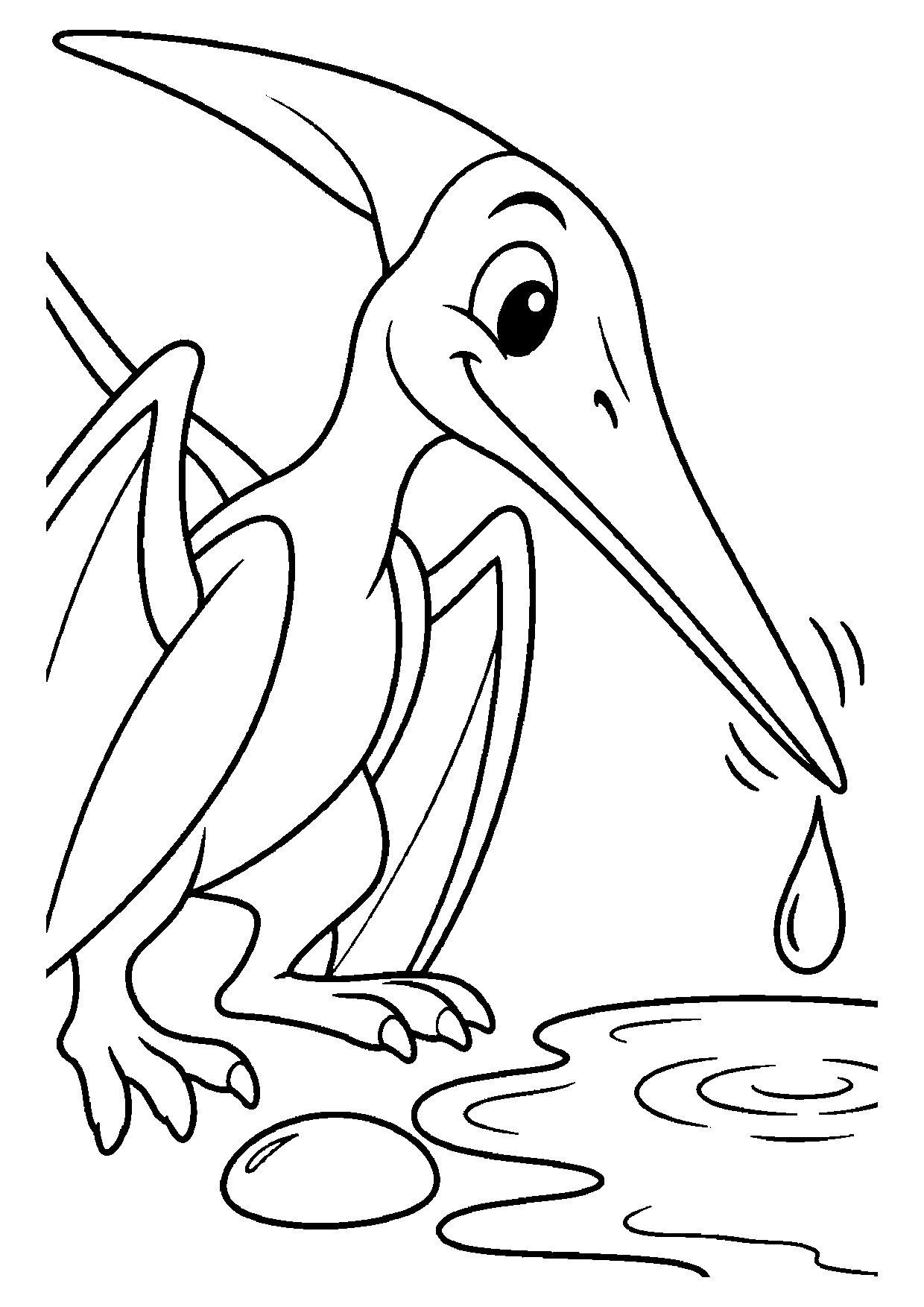
A friendly Pteranodon leans over a shallow puddle and flicks one last drop of water from the tip of its beak.
A4 format (portrait), black outlines on a white background · for home and classroom use
All coloring pages: Flying and Sea Reptile Coloring Pages
Similar coloring pages: Flying and Sea Reptile Coloring Pages



What else can you print? Free, no account needed
Custom Name Coloring Pages
Enter your child's name to generate a custom coloring page featuring large outline letters to color and decorate.
Open generator →Connect the Dots Generator
Eight connect-the-dots pictures across three difficulty levels. Features faint outline guides for younger children and dots only for older kids.
Open generator →Printables
Worksheets, tracing lines, mazes and dot-to-dots in A4.
Browse printables →
Pteranodon Shaking Water from Its Beak
A cheerful Pteranodon stands on clawed feet at the edge of a shallow puddle. Its long, pointed beak tilts downward, small motion lines show a quick shake, and a single water drop falls toward the surface, where rings spread across the water. The bony crest sweeps backward from the head, the folded wings rest along the body, and a smooth oval pebble lies in the front corner. The beak, crest and wings are drawn as wide, simple areas that are easy to fill.
Meet the Toothless Wing
Pteranodon was a pterosaur, a flying reptile, and not a dinosaur, even though it lived at the same time as many of them. It soared over the shallow sea that covered the middle of North America during the Late Cretaceous, more than 80 million years ago. Its name means toothless wing, and fish remains found inside some skeletons show that it caught fish with its long beak.
More than a thousand Pteranodon fossils have been dug up, many of them from the chalk beds of western Kansas. Each wing was a skin membrane stretched along an extremely long fourth finger, and large males reached wingspans of around 5 to 6 metres. The crest was much bigger in males, so scientists think it was used for display.
Natural Colors of the Scene
Nobody knows the true colors of Pteranodon, so the tones of modern seabirds make a good guide.
- Body and neck: pale grey, sandy beige or off-white
- Wings: warm brown or slate grey with slightly darker edges
- Crest: a bolder rusty orange or deep red for a display crest
- Beak: pale ivory or horn yellow
- Water drop and puddle: light blue with white ripples
- Pebble: grey or light brown